
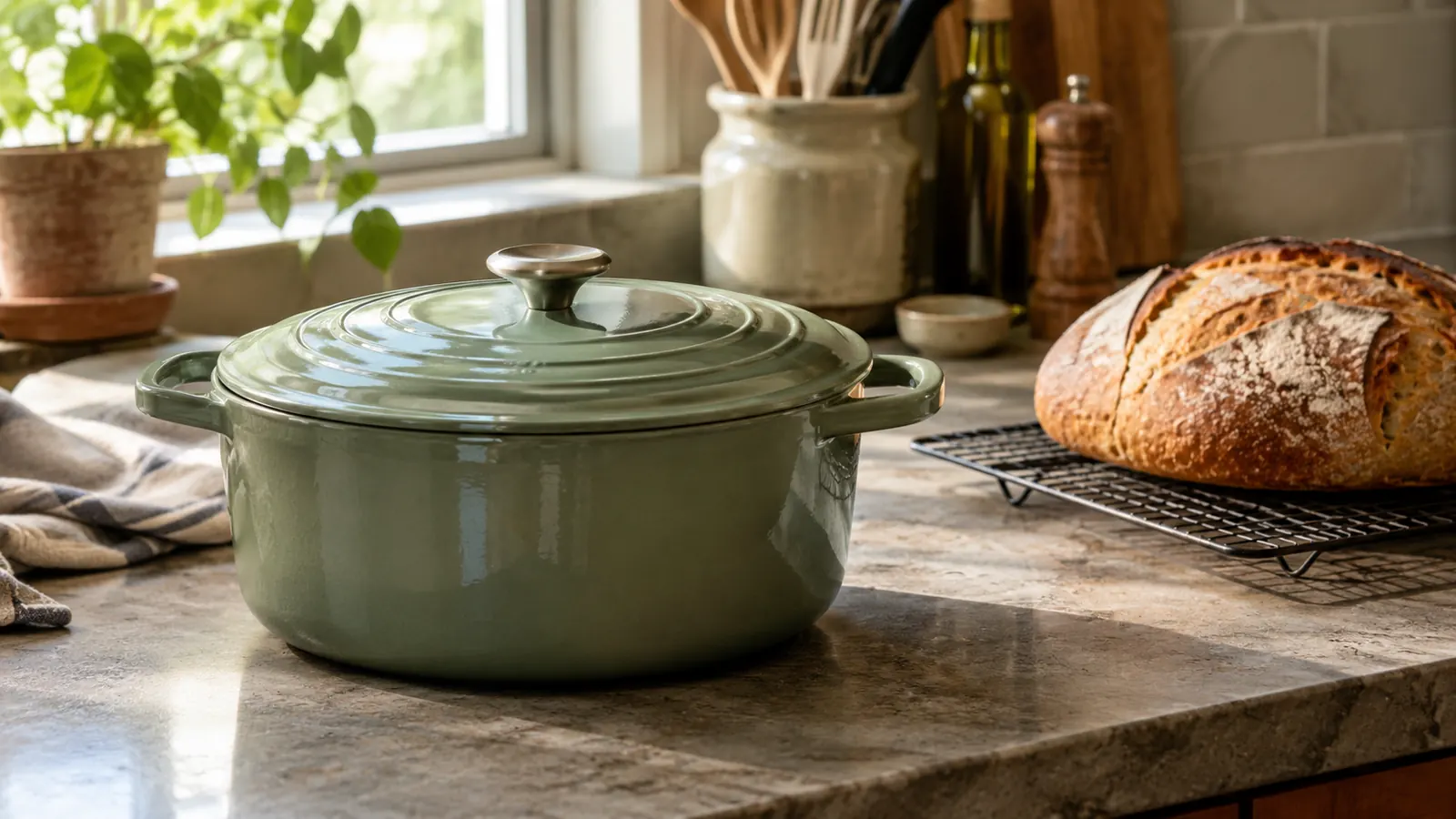
I have one standard electric oven, the kind that preheats slowly, has a hot corner in the back left, and makes you wonder if your baking is the problem or the appliance is. So when a friend asks what I really think of the Overmont Dutch oven, what she is really asking is whether a 5.5 quart enameled cast iron pot can earn its place in a kitchen with one modest stretch of counter and a pantry shelf that is already full. My honest answer, after about a year of weekly use, is yes. But there are things I wish someone had told me before I bought it, and this is the review I was looking for back then. It has also taught me patience, which is not a feature you will find in any listing.
The short version is this: the Overmont does the three jobs I bought it for. It bakes a better loaf of bread than anything else I own. It braises and stews without scorching. And it goes from oven to table without making me transfer dinner into another dish. The longer version has more nuance, because a Dutch oven asks for more care than a sheet pan, and you deserve to know exactly where that care shows up before you give one cabinet space. It is the pot I reach for when I want dinner to feel a little more special than a sheet pan dinner, which is most Sundays.
The Quick Verdict
A 5.5 quart enameled cast iron pot that earns its keep if you bake bread or cook for three to five people, with real caveats about weight, hand washing and the care the enamel finish asks for.
Amazon Check Today's Price →If you bake even one loaf a week, this is the pot I would start with.
I have used this Overmont nearly every week for about a year, and it is the first thing I reach for when the dough is ready. It is not perfect, and the tradeoffs are all below. But if those tradeoffs sound like ones you can live with, today's price is worth checking before you keep scrolling.
Amazon Check Today's Price on Amazon →How I've Used It
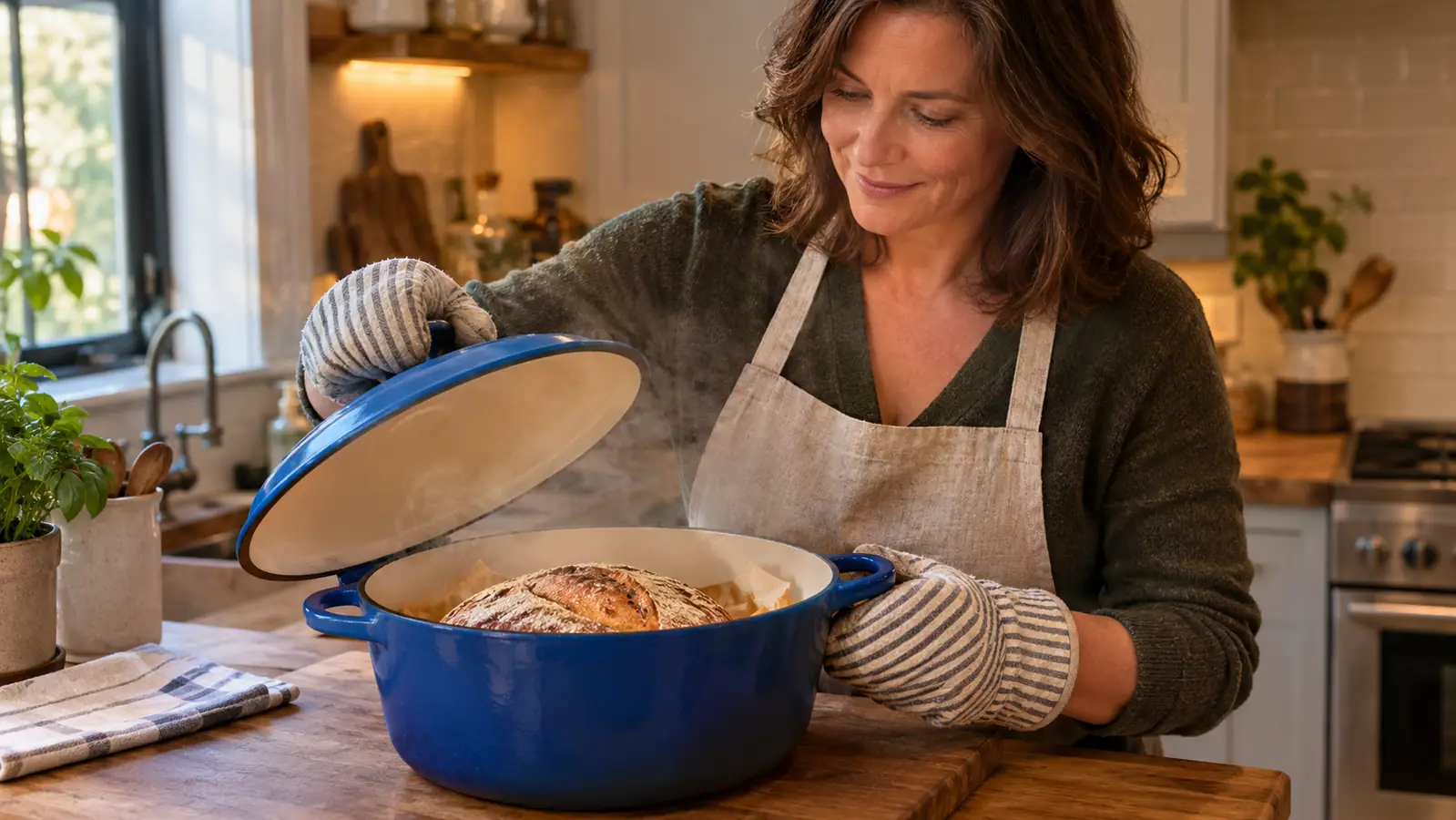
I bought this pot for bread, and bread is still what I use it for most. Most Saturdays I mix a sourdough loaf on Friday night, shape it Saturday morning, and bake it in the Overmont at 450°F. My oven runs a little hot, so I have learned to set the temperature lower than the recipe says, but the pot itself has been consistent from the very first bake. The first loaf went in on a Saturday in January when the kitchen was 66°F and the dough had proofed overnight on the counter. I baked it covered for 30 minutes, then uncovered for 15, and pulled it when the crust was a deep brown. It rose higher than any loaf I had made in years. I have also made braised short ribs, a big batch of chili for a school fundraiser, baked pasta, and more loaves of sandwich bread than I can count.
The box also includes things I did not expect: a small recipe book, a silicone mat, and two pot holders. I use the silicone mat every time I set the pot on my counter, because cast iron has real heft and I do not want to scratch the surface. The pot holders live in the drawer next to the stove and get used for moving a warm pot a few feet. And the recipe book has two recipes I have made more than once, which is more than I can say for most booklets that come in a box.
Over about a year, the pot has become the thing I reach for when I want a result I can count on. The even heat and heat retention the listing talks about are real: a loaf that bakes in the center of this pot comes out the same as one baked at the edge, which I cannot say for my sheet pans. The 5.5 quart size fits our family of four with room to spare, and it handles a standard loaf, a whole braise, or a double batch of soup without crowding. I have also used it for no-knead bread, focaccia, and a batch of dinner rolls, and the rolls were the best I have made.
What Nobody Tells You About Enameled Cast Iron
Here is the honest part. Enameled cast iron is not a set-and-forget pan. The care card says hand wash only, and it means it. I have owned this pot for about a year and I have never once put it in the dishwasher, because the enamel finish is the whole point and a dishwasher is how enamel finishes go dull. I wipe it with a dry cloth after washing, the way the instructions say, and I store it with the included silicone mat between the lid and the pot so the rims do not knock against each other.
The other thing nobody tells you is that the pot is heavy. Cast iron is heavy, and enameled cast iron is cast iron with a coating. The 13.2 inch width means it takes up a full burner and then some, and the 7.1 inch height means it lives on the lower shelf of my cabinet because it does not fit on the upper one. I keep it on the bottom shelf with the lid nested on the silicone mat, and I still brace myself every time I lift it out. The first time I moved it from the stove to the table with one hand, I nearly dropped it, and I have used two hands ever since. None of this is a flaw. It is the reality of the material, and the people who are happiest with this pot are the ones who knew that going in.
There is also the question of what you will cook in it, because a pot this size asks you to cook real meals, not just a single portion. The first month I owned it, I found myself planning dinners around it, which is the opposite of a gadget that sits unused. That is the sign of a keeper in my kitchen: it changes how you cook, not just what you own.
The Bread Test: What Actually Happened
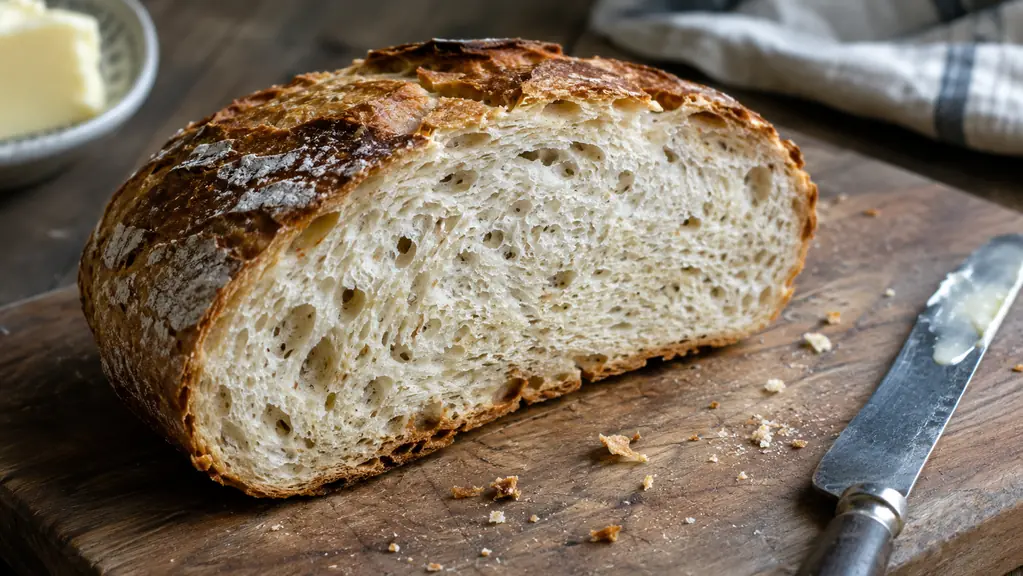
I want to be specific here, because this is the part that made me a believer. Before the Overmont, I baked bread in a loaf pan and got a decent sandwich loaf with a soft crust. The first loaf I baked in this pot had a thick, crackly crust and a taller rise than I had managed in fifteen years of home baking. I had not changed my recipe. I had only changed the pot. That first loaf measured about four inches tall at the center, where my loaf pan version usually topped out around three. I wrote the date and the details in the margin of my recipe book, which is something I only do when a result surprises me. The 500°F temperature rating matters for bread, because most of my recipes ask for 450°F and the pot needs to be oven safe above that with room to spare.
The mechanism is simple and well documented: the pot preheats in the oven, the dough goes into a hot vessel, and the lid traps the steam from the dough so the crust can expand before it sets. That is the same reason commercial bread ovens inject steam. A Dutch oven does it at home. The Overmont does it with a lid that is itself enameled cast iron, which means the top of the loaf gets the same steady heat as the bottom.
One honest note: one Sunday when I was rushing, I skipped the preheat and put cold dough into a cold pot. The loaf came out fine, just shorter and denser, and my family ate it without complaint. Every bread baker, and the recipe book that came with the pot, will tell you to preheat the pot, and they are right. The pot does the work, but you still have to do the one simple step that makes it work.
The first loaf I baked in this pot had a thicker crust and a taller rise than anything I had made in fifteen years of home baking, and I had not changed a single ingredient.
Where It Earns Its Cabinet Space
The bread alone would be enough, but the pot earns its space in other ways. The 5.5 quart capacity is the sweet spot for our household of four: big enough for a whole chicken braise or a double batch of soup, small enough that it does not feel like I am heating a cauldron for two servings. It is oven safe and stove safe, so I can start a braise on the burner and slide it straight into the oven, and because the finish is enameled, it goes from oven to the table without any drama.
I live outside Madison, and our winters are long enough that a pot that braises on a cold Sunday is not a luxury. The cleanest way to describe this one is that it does not disappear between uses. It keeps showing up, because it does the jobs I used to need two or three pieces of equipment for: a loaf of bread, a pot of beans, a batch of caramelized onions, a small roast for a birthday dinner. One Sunday in February I used it for a pot of beans that simmered for four hours on the stove, then moved straight into the oven for another hour while we were outside shoveling. That same week it baked two loaves of bread. Three jobs, one pot, and the only cleanup was one pot and one lid. When my daughter Nora asked to learn to bake bread, this is the pot she reached for, and her second loaf was better than my first, which I am not bitter about at all. That is the kind of quiet usefulness that keeps a pot on the counter instead of in the back of a cabinet.
The stove-to-table thing sounds like marketing, but it is genuinely useful on a weeknight. I do not own another pot I would set in front of guests, and this one I do without thinking. The enamel finish cleans up with warm water and a soft sponge, and the hand-wash rule stops feeling like a chore once you get used to it. It also means fewer dishes, which in my house is a genuine form of love.
One more thing I did not expect: the pot has made me a better baker, because it takes the variables I used to fight out of the equation. My oven still has that hot corner, but the pot smooths it out. My kitchen still gets cold in January, but the heat retention keeps the dough rising. I cannot promise a Dutch oven will fix every baking problem, because it will not. I can promise that this one removed the biggest one for me.
The Tradeoffs Nobody Puts in the Listing
Now the part I promised you. The Overmont is not the right pot for every cook, and there are three tradeoffs I think about every time someone asks. First, hand washing. If your kitchen runs on a dishwasher and you have never hand washed a pot in your life, this one will annoy you. Second, the weight and size. It is a 13.2 inch round pot that takes a full burner, and the lid alone is heavy because it is enameled cast iron too. I have learned to lift it with two hands every time, no exceptions. The first month, I washed it in the sink while the kettle was still warm and learned to give myself ten extra minutes before starting the next thing. Now it is just part of the rhythm.
Third, the enamel finish asks for a little respect. I use wooden and silicone utensils with it, I never stack other pots inside it, and I wipe it dry after washing. The included silicone mat helps with storage, and the two pot holders are fine for moving a warm pot across the kitchen, though I still use my own thick mitts for anything that has been in a hot oven. None of this is hard. It is just more than a sheet pan asks, and you should know that before you buy.
I compared this pot against a lighter enameled option before I bought it, and the weight almost talked me out of it. What changed my mind was the heat retention. A lighter pot heats faster, but it also loses heat faster when the oven door opens. The Overmont holds its heat, which is exactly what bread wants, and the one-year manufacturer warranty is standard for the category. I made my peace with the weight, and I have not second-guessed it since.
What I Liked
- Even heat and real heat retention: bread, braises and soups come out consistent every time
- 5.5 quart capacity fits family meals for three to five people
- Oven safe to 500°F and stove safe, which covers nearly every bread and roast recipe I use
- Enameled finish goes from oven to table, and the included recipe book, silicone mat and pot holders are all genuinely useful
- Round 13.2 inch shape fits a standard home oven and a full burner
Where It Falls Short
- Hand wash only, and the care instructions are not a suggestion
- Heavy, and the lid is heavy too; it takes two hands and a full burner
- The enamel finish rewards gentle handling, which is more care than a sheet pan asks
- At 7.1 inches tall it does not fit every cabinet shelf, which matters in a small kitchen
Who This Is For
This pot is for the home baker who wants one piece of equipment that does a lot of jobs well. If you bake bread even a couple of times a month, if you cook for three to five people, if you like the idea of putting a pot on the table and letting everyone serve themselves, the Overmont is a genuinely useful purchase. It is also for the person who does not mind a little care in exchange for results. I am that person. I hand wash it, I wipe it dry, and I have never once regretted it.
Who Should Skip It
Skip it if you know you will never hand wash a large pot. Skip it if your kitchen has no room for a 13.2 inch round pot, because it will live on a burner or a shelf and it will not squeeze into a narrow cabinet. Skip it if you mostly bake cookies and muffins and rarely cook anything that needs a covered pot, because a baking sheet will do that work with less weight and less care. And if you already own a Dutch oven you love, you do not need a second one. This review is for the person deciding on their first.
Still deciding? Here is what I would do.
I have used this Overmont for about a year and I would buy it again. The honest caveats are above: hand washing, weight, and a little respect for the enamel. If those sound like fair trade for better bread and easier one-pot dinners, check today's price. If they sound like chores, keep the cabinet space.
Amazon Check Today's Price on Amazon →