
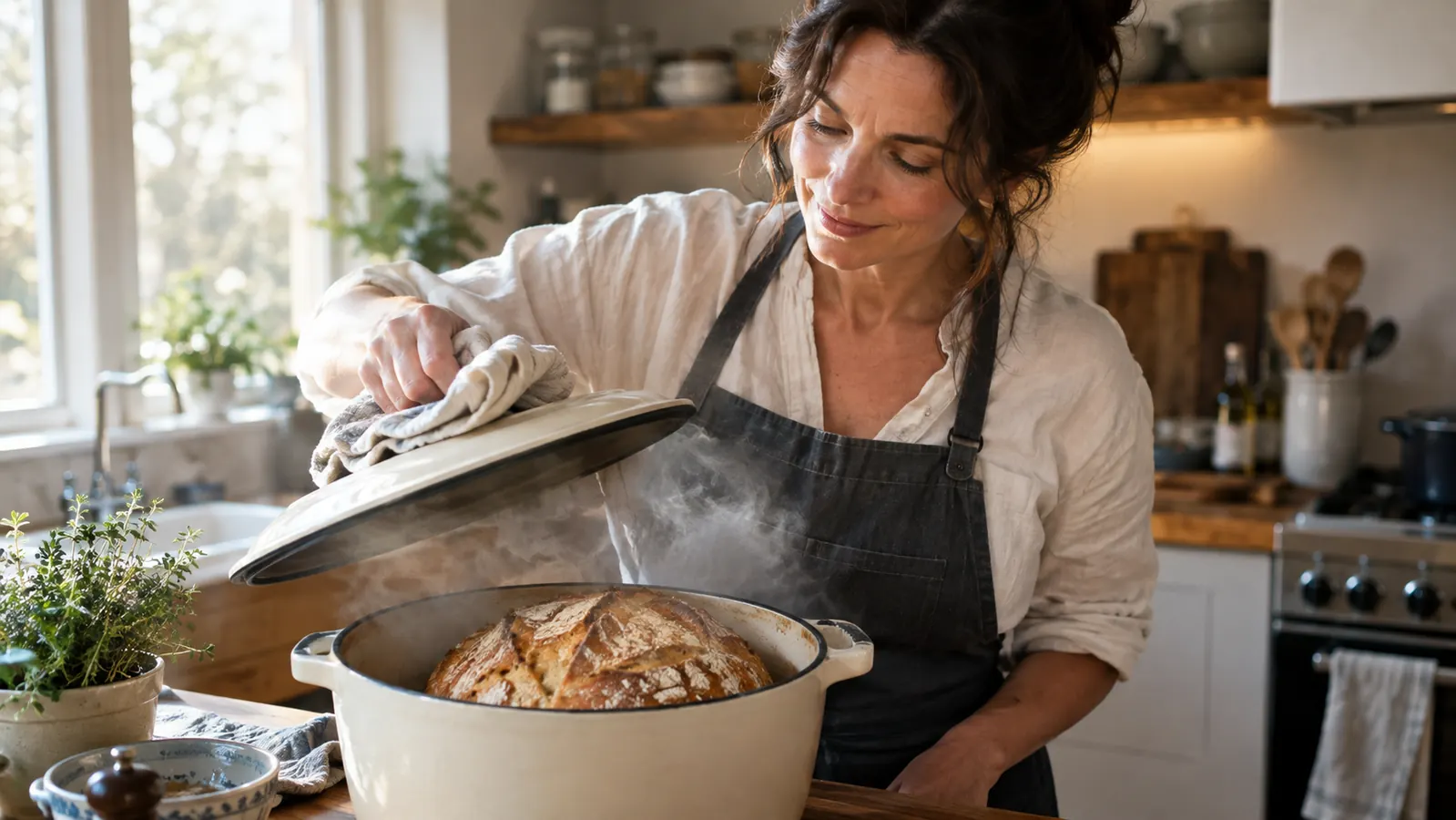
I have one standard electric oven, a modest stretch of counter, and fifteen years of loaves that came out of it. For most of that time I baked bread on a baking sheet, and most of that time the loaf looked fine in the photos and slightly wrong in person: flat-ish, pale on the sides, crust like a grocery store roll. Then I bought the Overmont Enameled Cast Iron Dutch Oven, 5.5 quarts, and the first loaf that came out of it had me texting my sister a picture before it was even cool. It was a Sunday in late February, the kitchen was cold, and the dough had been sluggish all day. I nearly threw it out and started over, but the oven was already hot, so I slid the covered pot in and went to peel potatoes. Forty-five minutes later I pulled out a loaf with a crackle I could hear from across the room. Same flour, same water, same yeast, same oven. The only difference was the pot, and the pot fixed every complaint I had collected for a decade.
If you have ever wondered why every bread recipe says to preheat a Dutch oven, here are the ten reasons, in the order they showed up in my kitchen.
The 5.5-Quart Pot That Changed My Bread
One pot, one standard oven, and the same dough recipe suddenly bakes tall, crusty loaves. It is the Overmont Enameled Cast Iron Dutch Oven, and it is the only piece of baking equipment I have recommended to more than one person this year.
Amazon Check Today's Price on Amazon →It Traps the Steam Your Oven Cannot Make
A loaf needs steam in the first part of the bake so the crust stays soft long enough for the dough to rise. A home oven has no steam setting, and a pan of water on the bottom rack helps only a little. I tried that pan for a full year, and all it did was fog the window and make the kitchen humid. I tried ice cubes on the oven floor, which steamed the glass and did almost nothing for the loaf. I even bought a spray bottle and misted the walls like a nervous bird. A covered Dutch oven traps the moisture that comes off the dough itself. The dough bakes inside its own little steam room, the crust stays flexible, and the loaf rises up instead of out.
It Holds Heat Like a Brick Wall
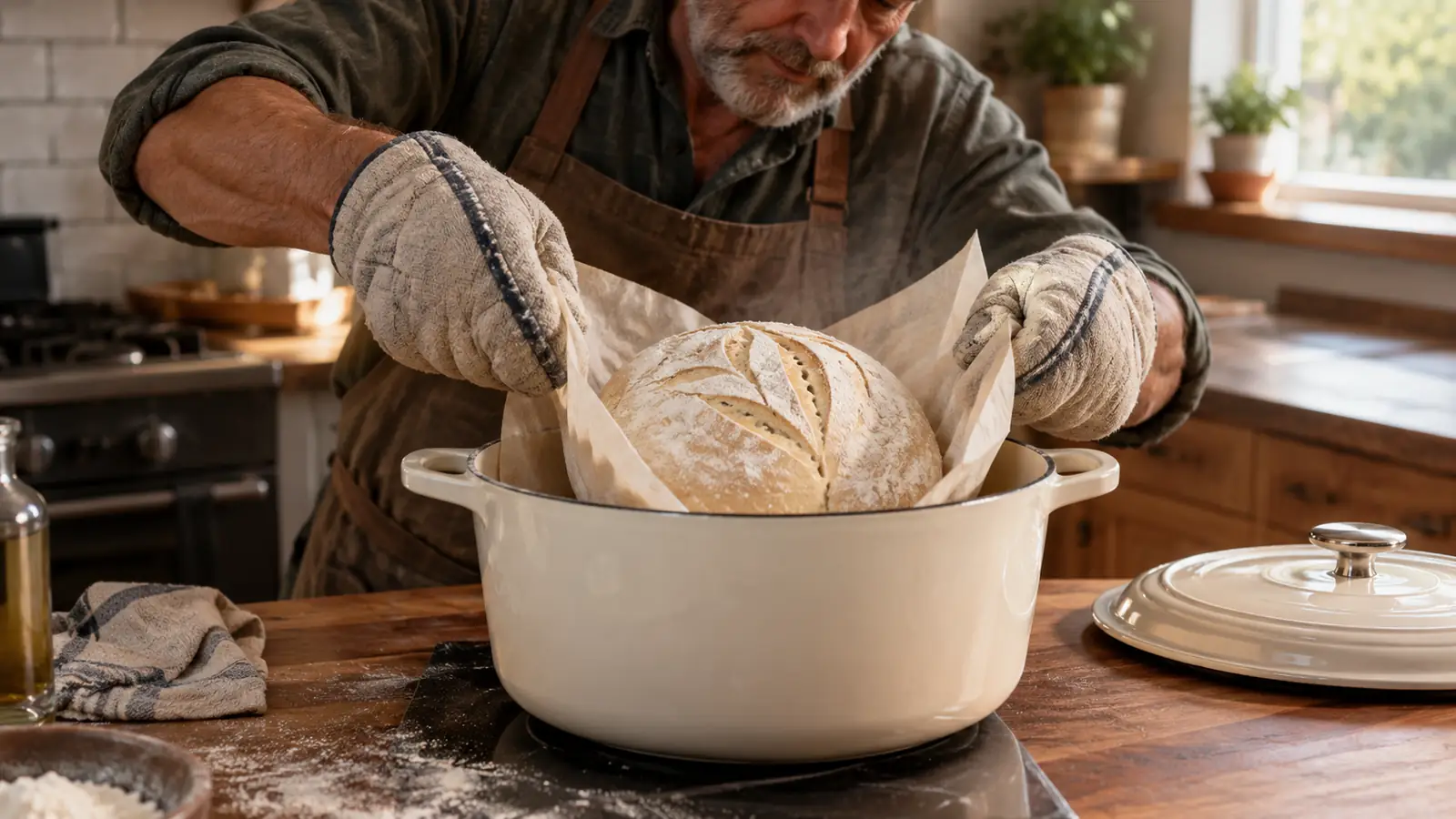
Cast iron is heavy because it wants to hold heat. When I slide the covered pot into a cold oven and let them preheat together, the walls and lid get fully hot before the dough goes in. I set the oven to 450 and give the pot a full hour, not the twenty minutes the recipe suggests, because a warm pot is not the same as a hot pot. Drop cold dough onto a hot surface and the bottom gets a fast, confident spring. That initial blast of heat is the difference between a tall loaf and a tired one.
It Bakes the Crust Evenly on Every Side
A baking sheet gives the dough heat from below and only a little from the sides. The pot surrounds the loaf with hot cast iron on the bottom, the walls, and the lid. The whole crust sets at the same pace, so you get a round, even loaf instead of a pale band where the sides never caught up.
It Makes Bakery-Style Crust Without a Stone
Bread stones work by absorbing and radiating heat, but they take up permanent oven space and they crack if you look at them wrong. I bought one in 2019, used it twice, and cracked it sliding a loaf in with too much enthusiasm. I kept the pieces on the bottom rack for months, telling myself they still held heat, but the loaves kept coming out lopsided. The 5.5-quart Overmont does the same job from inside a covered pot, then moves to a cabinet when it cools. Same crackly crust, no stone to store, and nothing to break.
It Keeps the Oven Clean
The worst part of baking bread on a sheet was the cleanup: burned flour, stuck bits, and a tray that needed serious scrubbing. In the pot, the loaf bakes inside parchment or right on the bare enamel, and the mess stays in one place. Hand wash, wipe with a dry cloth, done. My oven bottom has never been cleaner.
It Preheats While You Do Nothing
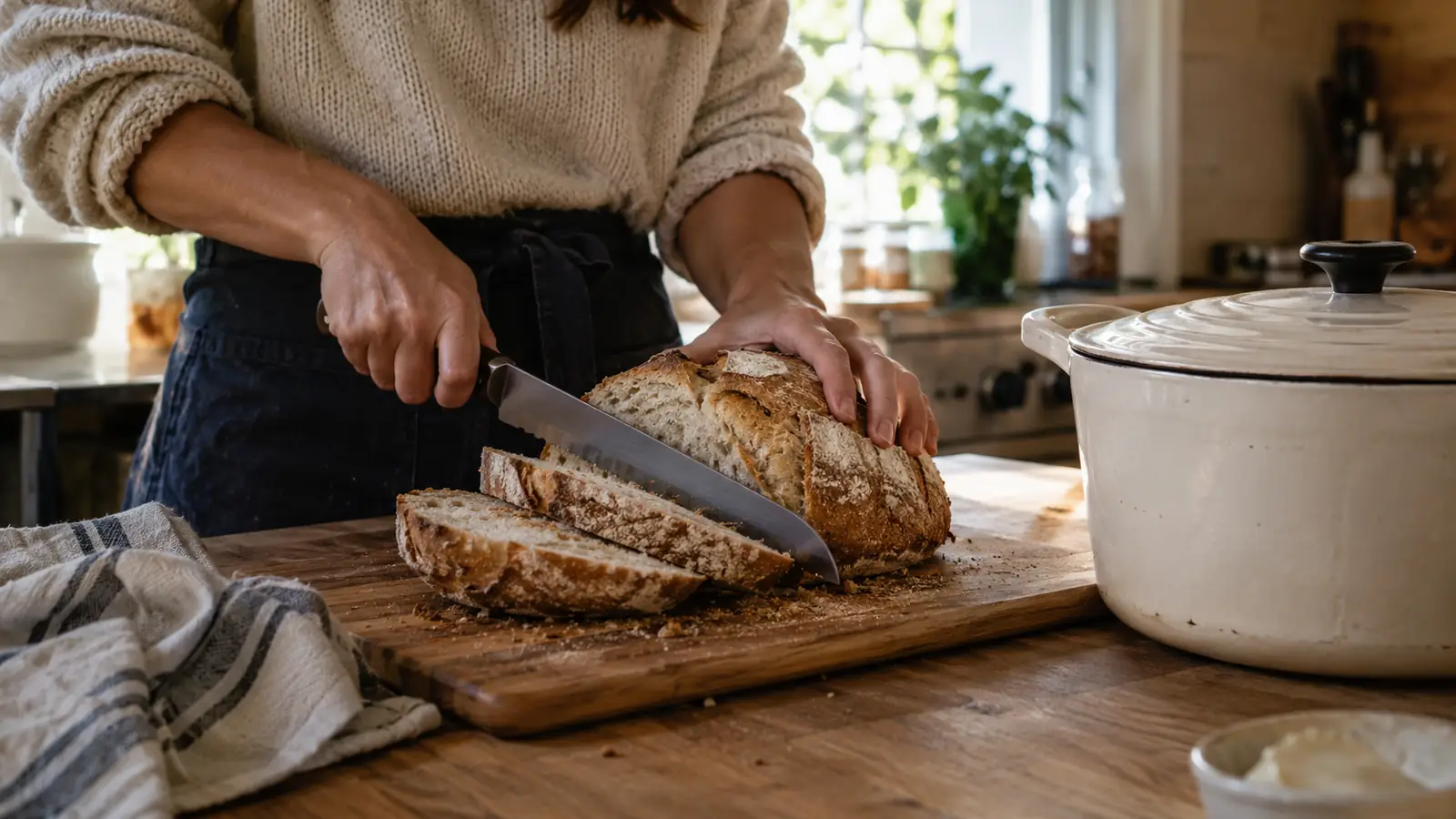
No steam pans to refill, no ice cubes to toss on the oven floor, no spray bottle. I put the covered pot in the cold oven, set the temperature, and go fold laundry. When the oven beeps, the pot is ready. For a weekday bake, that hands-off preheat is the whole reason bread happens at all.
The Lid Holds the Heat, Not the Room
The enameled cast iron lid is not a decoration. It radiates heat down onto the top of the loaf, which is exactly where a baking sheet loaf goes pale. The top browns at the same rate as the sides, so the finished loaf is one even color all the way around.
It Turns a Wet Dough Into a Manageable Bake
High-hydration dough is the key to open crumbs, and open crumbs are the key to bread that feels light. My regular recipe runs about 78 percent hydration, which means 390 grams of water to 500 grams of flour. On a baking sheet, that dough spread into a wide, flat disk no matter how carefully I shaped it, and getting it off the peel without deflating it took both hands and a prayer. The first time I baked that same dough in the pot, it climbed the walls like it had somewhere to be. The walls hold the shape while the heat sets the structure, so you get the open crumb without the floury wrestling match.
It Gives You a Second Chance at a Cold Oven
I have forgotten to preheat the pot more times than I want to admit. With the Overmont, I just put the covered pot in the cold oven, set the temperature, and add about fifteen minutes to the schedule. The loaf still comes out right. That forgiveness is worth real money to a home baker with a school schedule.
It Makes the Same Loaf Every Single Time
Consistency is the quiet win. The 5.5-quart pot is always the same temperature, always the same shape, always the same heat. My baking sheet loaves varied with the weather and my mood: a rainy Tuesday gave me a dense crumb, a rushed evening gave me a pale top. The Overmont loaves come out the same on a Tuesday after work and a Sunday morning, and that is what earns cabinet space in a kitchen where every shelf is already full.
What I'd Skip
I would skip the Dutch oven if you only bake flatbreads, crackers, or pizza on a stone, because the covered pot does nothing for those. I would also skip it if you refuse to hand wash a large pot, since the care instructions say hand wash only. And I would skip it if your oven cannot fit a 13.2 by 7.1 inch round pot with room to spare, because you need the lid to close and the heat to circulate. For everything else, it has been the best baking purchase I have made in years.
Same flour, same water, same yeast, same oven. The only difference was the pot, and the loaf came out tall, round, and crackly.
Bake Your Best Loaf This Weekend
If you have been fighting flat loaves and pale crusts, the fix is not a new recipe. It is a 5.5-quart enameled cast iron pot that traps steam and holds heat. The Overmont has earned its spot on my pantry shelf, and it will earn its spot on yours.
Amazon Check Today's Price on Amazon →