

Every week, same scene in my kitchen: I pull a loaf out of the oven, and it looks like a deflated football. Pale, flat, tough on the outside, dense on the inside. I had the flour, the yeast, the time. What I didn't have was steam. If you've been baking bread on a baking sheet and wondering why it never looks like the bakery loaf, this comparison is for you. I'm Marisa, a home baker for about fifteen years, and I tested the Overmont Dutch oven against my everyday baking sheet with the same dough, same oven, same week.
Here's the short answer: for a single round loaf of crusty bread, the Overmont Dutch oven wins, and it's not a close call. The covered pot traps steam, the cast iron holds heat, and the loaf comes out taller with a crust that crackles. But the baking sheet wins other rounds, like baking two baguettes at once or cleaning up in under a minute. So the honest answer depends on the loaf you want to bake. Let me walk you through the real differences.
| Overmont Dutch Oven 5.5QT | Baking Sheet | |
|---|---|---|
| Oven spring | Trapped steam keeps the crust soft while the loaf expands, so rounds rise tall and proud | Dough spreads wider without steam, so loaves come out lower and flatter |
| Crust | Thick, crackly crust that shatters when you slice it | Thinner, softer crust unless you add steam another way |
| Steam | The lid traps the dough's own moisture, no extra steps | Needs a pan of water or ice cubes to fake it |
| Heat retention | Enameled cast iron holds heat and recovers fast when cold dough lands | A sheet pan loses heat quickly when the oven door opens |
| Batch size | One 5.5-quart round loaf at a time | Two baguettes, a big focaccia or a tray of rolls at once |
| Time to preheat | Needs a long empty preheat to get properly hot | Ready by the time the oven beeps |
| Cleanup | Hand wash only, and the pot is heavy when full | Parchment lifts off and a quick wipe finishes it |
| Storage | A 13.2-inch round pot takes a whole shelf | Slides flat into the cabinet next to the cookie pans |
| Best for | Round boules and batards with thick crust | Baguettes, focaccia, flatbreads and cookies |
How I Tested This
I kept the test simple because that's how I actually bake. Same white bread dough, same fridge proof, same standard electric oven, same week. One batch baked in the Overmont, preheated empty for a full hour with the pot inside. One batch baked on my everyday rimmed baking sheet with a pan of water on the rack below for steam. I scored each loaf on rise, crust, crumb and how much fuss it took to get there.
I should say what I'm not doing. I'm not a trained baker and I don't own a steam-injection oven. I'm a school office manager in Madison, Wisconsin, who bakes every week for her family, her coworkers and the occasional school bake sale. That's the point. Everything here happened in an ordinary kitchen with ordinary equipment, the same kind most home bakers have. If it works here, it'll work in your kitchen too.
I baked the same recipe three weekends in a row to make sure I wasn't fooling myself. The first weekend the sheet loaf actually looked better, because I had the steam pan in exactly the right spot. By the third weekend, the pattern was clear. The Dutch oven loaf was taller every single time, and the crust was noticeably thicker. That consistency is what convinced me, not any single dramatic loaf.
Where the Overmont Wins
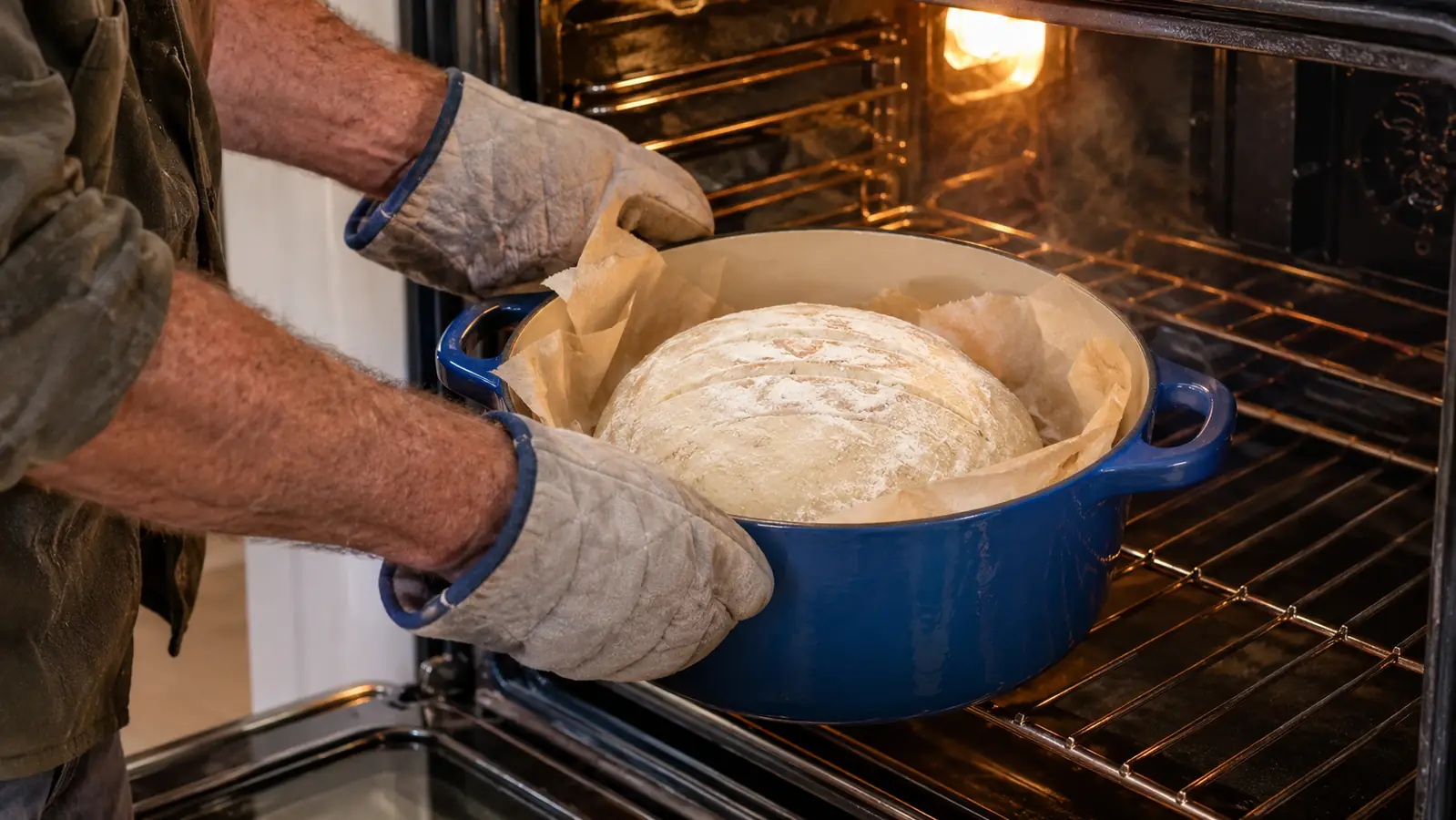
The first thing I noticed was oven spring. Same dough, same proof, and the loaf from the Overmont came out a full two inches taller than the one from the baking sheet. The reason is simple. A covered pot traps the moisture that leaves the dough as it bakes, and that steam keeps the outside soft long enough for the inside to push upward. Once the loaf is tall, I take the lid off for the last stretch of baking, and the crust turns thick and crackly. That crackle is the first thing people mention when I bring bread to the bake sale.
The other quiet advantage is heat. Enameled cast iron holds a lot of it, so the pot recovers quickly when the cold dough lands inside. A baking sheet loses heat the moment the oven door opens, and the dough feels it. The Overmont gives the bottom of the loaf an immediate, even blast of heat, which means a better rise and a more even crumb. The 5.5-quart size is billed for families of three to five, which is exactly my household, and at 13.2 inches round it fits my standard oven with room for air to move around it.
The same dough came out two inches taller in the Overmont, and the crust crackled when I picked it up. That was the week I stopped reaching for the baking sheet.
Where the Baking Sheet Wins
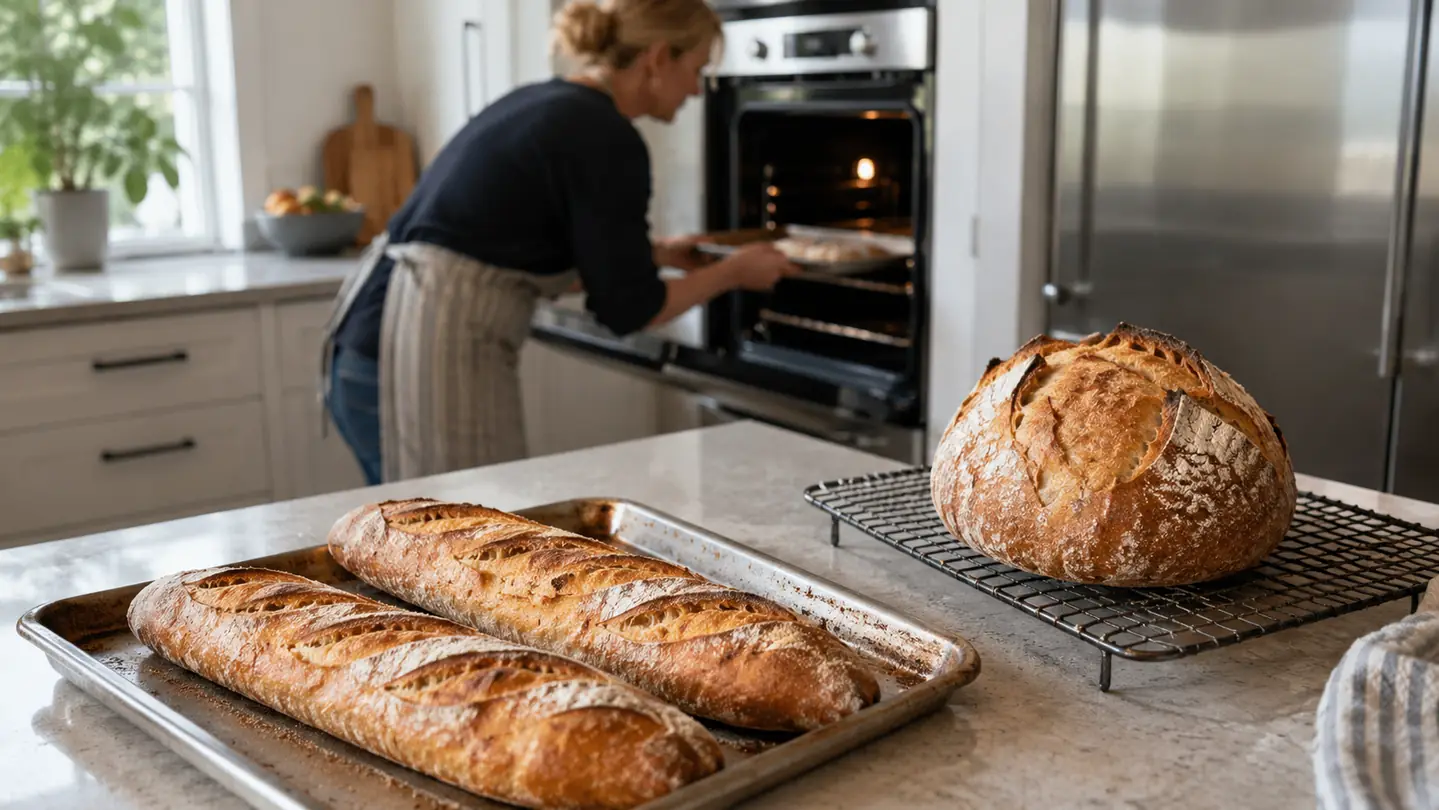
Now the honest part, because a comparison that only praises one side isn't worth your time. If I'm baking for a crowd, I reach for the baking sheet. The Overmont bakes one round loaf at a time, and that's it. A rimmed baking sheet holds two baguettes, a big slab of focaccia or a dozen rolls, all at once. The sheet is also ready faster. It heats up with the oven, while the Dutch oven needs a long empty preheat to get properly hot. On a weeknight, that extra half hour is real.
Cleanup is where the sheet runs away with it. I line mine with parchment, the bread lifts right off, and a quick wipe finishes the job. The Overmont is hand wash only, and it's heavy, especially full of water. It also takes real cabinet space. At 13.2 inches round, it owns a full shelf in my pantry. The sheet slides flat into the cabinet next to the cookie pans. If your kitchen is short on storage, that's a genuine consideration, not a small one.
What the Crumb Tells You
Slice both loaves open and the difference is right there in the crumb. The Overmont loaf has an open, uneven crumb with bubbles you can see, the kind that soaks up butter without turning to paste. The sheet loaf is fine, but it's denser, with smaller, more regular holes. That's the oven spring showing up on the inside, not just the outside. A loaf that rises well has room for those irregular pockets; a loaf that never got the steam it needed stays tighter.
I'm not saying the sheet loaf is bad. It makes excellent toast, and my teenagers will eat either one without comment. But when I'm slicing bread for a table of adults, the difference is obvious. The Overmont loaf looks like something from a bakery case, and it keeps longer too, because a thicker crust holds moisture in. Day three, the Dutch oven bread is still good; the sheet bread is starting to dry out.
A Sunday in My Kitchen
Here's what a Sunday looks like at my house. I mix the dough in the morning, let it rise while I'm doing laundry, and shape it after lunch. About an hour before I want to bake, I put the Overmont in the oven, empty, and let it heat up. When the oven reaches temperature, I lower the dough in on parchment, put the lid on, and set a timer. Thirty minutes covered, then the lid comes off for the final stretch. No water pans, no ice cubes, no spraying the walls of the oven with a mist bottle.
With the baking sheet, that same Sunday takes more babysitting. I have to put a pan of water on the rack below, remember to check it halfway through, and hope the steam lasts. The bread comes out good, but I'm working for it. The Overmont version is hands-off, and honestly, that matters on a weekend. I'd rather spend the free time doing something other than nursing a steam pan.
What Nobody Tells You About the Dutch Oven
The Overmont is oven safe up to 500 degrees, which means it handles the high heat that bread wants without complaint. It's also stove safe, so I can sear on the burner and slide straight into the oven. But nobody warns you about the weight. This is heavy-duty cast iron, and the trade for all that heat retention is a pot that takes two hands and a little care. I keep it on the bottom shelf so I'm not lifting it over my head.
The small extras matter more than you'd think. It comes with a recipe book, a silicone mat to protect the table when you set the hot pot down, and two pot holders that actually fit. Hand wash only, which is fine once you get used to it. I think of the cleaning as part of the ritual. And because it goes straight from oven to table, it earns its keep on soup nights and braise days, not just bread days.
And the lid matters too. It's enameled cast iron, same as the pot, and it fits snugly, which is the whole point for trapping steam. When I lift it, drops of condensation fall back onto the loaf, and that's exactly what you want. A loose lid might as well be a baking sheet.
Bake the tall, crackly loaf your sheet pan can't.
The Overmont Enameled Cast Iron Dutch Oven traps the steam your bread needs, holds heat like cast iron should, and moves from oven to table. It's the one pot that fixed my bread.
Amazon Check Today's Price on Amazon →Who Should Buy Which
Buy the Overmont Dutch oven if you bake a round loaf at least once a week, if you want that thick crackly crust without building a steam system, and if you want one piece of gear that also does soups, braises and pot roasts. It's a buy-once kind of tool. I reach for mine more than any other pot I own.
Keep the baking sheet as your bread pan if you mostly bake baguettes, focaccia, flatbreads or rolls, if you regularly bake two loaves at once, or if bread is an occasional weekend project. The sheet is lighter, easier to clean and already in your kitchen. For those bakes it's the right tool, and there's no shame in that.
The truth is, most of us end up with both. The sheet keeps doing cookies, sheet cakes and roasted vegetables, and the Dutch oven takes over bread and braises. They're not rivals, they're a team. But if you're choosing one tool specifically for bread, the Overmont wins on the two things that matter most: rise and crust.
One more note. The Overmont isn't a bread-only purchase. If you already make soups, stews or pot roasts, it replaces a pot you probably use anyway, and then the bread is a bonus. That's how I justified mine to myself, and it's held up. It's not a single-use gadget taking up a shelf. It's the pot I reach for several times a week, bread or no bread.
The Bottom Line
If you asked me to pick one, I'd pick the Overmont, and not because it's the more impressive piece of equipment. I'd pick it because it makes the bread I actually want to eat: tall, crackly, with a crumb that holds up to butter. The baking sheet makes good bread too, especially when I add steam by hand, but it asks me to work for results the Dutch oven gives me on its own.
So here's my kitchen-table advice. If your bread habit is one round loaf a week, get the Dutch oven and don't look back. If you bake for crowds or prefer long baguettes, keep the sheet and add steam your own way. Either choice is honest. The only wrong choice is buying both and letting one gather dust, and I don't think that'll happen with either of these.
Your next loaf could be your best one.
If you're tired of flat, pale loaves, this is the upgrade that actually shows up in the crumb. One pot, one loaf at a time, and it earns its shelf space in the first month of Sunday bakes.
Amazon Check Today's Price on Amazon →