

Every Saturday for the past fifteen years, I have made something in my kitchen. Pancakes, banana bread, a layer cake for a birthday, a double batch of cookies for the school bake sale. For most of that time, I did it with a hand mixer and a lot of patience. The hand mixer worked, sort of, until I got to stiff peaks or bread dough. Then I would switch to a wooden spoon and a sore wrist. When I finally brought home a KitchenAid Classic Series 4.5 Quart Tilt-Head Stand Mixer, I told Tom it was for the bake sale. It was really for me.
The Classic is not the fanciest mixer KitchenAid makes. It is the one that has been around for decades, the one my mother's friend had when I was a kid, the one you see in rental kitchens and first apartments. It is also, after a year and a half of weekly use, the tool I reach for without thinking. This review is about what that feels like, not just what the spec sheet says.
The Quick Verdict
For a home baker with one oven and a modest counter, the Classic is the mixer I recommend most often. It is not powerful enough for heavy commercial dough, and the design is old-fashioned, but it does the weekly work of a serious home baker without drama.
Amazon Check Today's Price →The mixer that finally ended my hand-mixer era
If you are tired of stopping mid-recipe to scrape dough off a beater, this is the one to check first. See today's price on Amazon.
Amazon Check Today's Price on Amazon →How I've Used It
I have had my Classic for about a year and a half. It sits at the back of my counter, pushed against the wall, because it weighs 22 pounds and I do not want to lift it out of a cabinet every time. That is the first thing you should know: this is a counter mixer. You will use it more if it is out. I know that is not true for every kitchen, but it has been true for mine.
I use it nearly every week. A typical month includes two or three batches of chocolate chip cookies, a banana bread, a birthday cake, a loaf of sandwich bread, and a batch of frosting. The Classic handles all of it. The 4.5 quart stainless steel bowl is big enough for eight dozen cookies in a single batch, which is more than I ever need for a school bake sale, but it is nice to have the room. I have never once wished the bowl were smaller. One Saturday last February, I used it for three things in a row: a double batch of cookies for Ben's class party, a pound cake for the neighbor recovering from surgery, and a loaf of bread for Sunday. The mixer ran for most of the morning and never complained. That was the day I stopped second-guessing the purchase, and the day Tom started calling it my third arm.
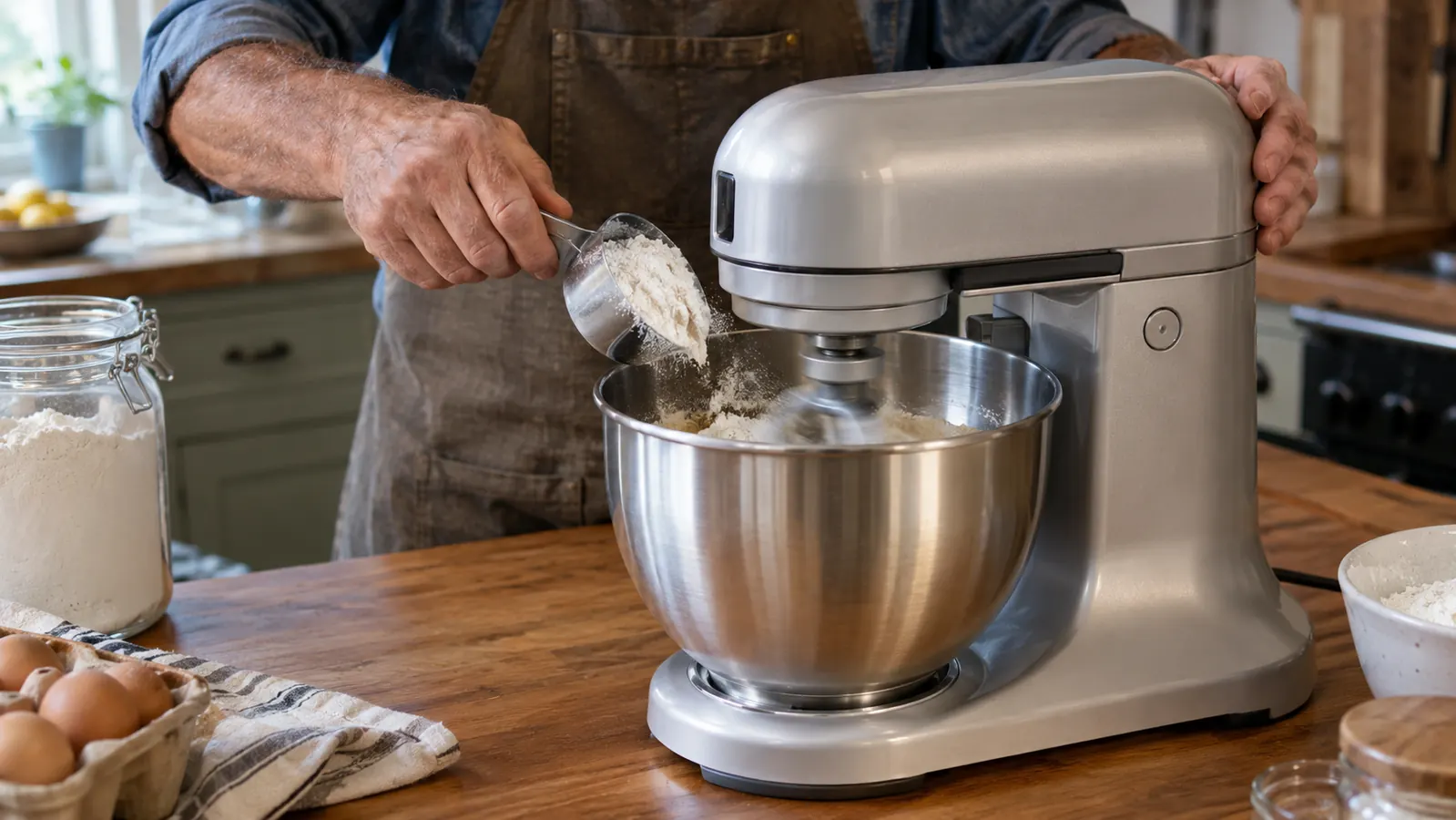
The tilt-head is the feature I appreciate most. I tilt the head back, and I can scrape the bowl properly. With my old hand mixer, scraping meant stopping, unplugging, and holding the mixer over the bowl while I worked a spatula around the beaters. With the Classic, it takes two seconds. That sounds small, but it changes how you bake. I add flour in three additions now, scraping between each one, and my batters come out smoother.
What the Classic Does Well
The first thing to understand is the speed control. The Classic has ten speeds, from a slow stir to speed 10. I live at speed 4 for most batters, speed 8 for whipped cream, and the stir speed for folding in chocolate chips. The speed control is stainless steel, and I have never had to guess where I set it. My old hand mixer had two speeds, high and higher, so this alone was a reason to switch. The stir speed is the one I did not expect to love. I use it to fold chocolate chips into cookie dough, and it lets me walk to the sink for a glass of water while the mixer does the work. Speed 2 is my default for cream cheese frosting, and speed 6 mashes softened butter into dry ingredients for biscuits without flinging flour across the counter.
The included attachments are the right ones for a home baker. The coated flat beater creams butter and sugar quickly and scrapes the bowl reasonably well. The coated dough hook kneads a single loaf of bread without complaint. The 6-wire whip gets egg whites to stiff peaks faster than I ever could by hand. I have not needed to buy a single extra attachment since I got it, and I do not feel like I am missing anything.
The construction is the quiet star. KitchenAid uses a metal body, and it shows. The mixer does not walk across the counter when I run it at speed 8, the way my old hand mixer did. It has 59 touchpoints around the bowl, which means the beater actually reaches the bottom and sides. That sounds like a small thing, but it is the difference between a well-mixed batter and a bowl of flour lumps. I noticed it the first time I made a pound cake.
Where It Shows Its Age
The Classic is not a powerful machine. It is 275 watts, which is modest by today's standards. It handles a single batch of bread dough, but a double batch will make it strain, and I have to stop and scrape the dough hook a few times. If you bake heavy, stiff doughs every week, you would be happier with a larger, more powerful mixer. For my weekly sandwich bread, it is fine.
The design is also old-fashioned in ways that take getting used to. The head tilts back, which is convenient, but you have to make sure the bowl is seated properly before you run it. The controls are a stainless steel speed control with ten speeds, no digital display, no timer. I do not mind that, but it is worth knowing what you are getting. It is not a mixer that will remind you to stop and scrape.
The weight is a tradeoff. 22 pounds means it stays put on the counter, but it also means you will not want to move it around. If your kitchen is short on counter space, you need to plan for that. I keep mine at the back of the counter and pull it forward when I need it, and that works for me. It is not a mixer you will want to haul out of a cabinet every Saturday.
Baking Results, Batch by Batch
The real test is what comes out of the oven. My banana bread improved the first time I made it in the Classic. The batter was smoother, the mashed banana was fully incorporated, and the loaf baked evenly. My chocolate chip cookies got more consistent too, because the butter and sugar were actually creamed, not just mixed. I have made that recipe so many times that I can taste the difference.
The birthday cakes are where the mixer earns its keep. I made Nora's birthday cake in the Classic last spring, a three-layer chocolate cake with a cooked flour frosting. The 6-wire whip turned the frosting silky in about five minutes. That would have taken me fifteen minutes and a lot of wrist work with my old mixer. The cake itself mixed in under ten minutes, and it baked up level and tender.
Bread is the one place I have to be honest. The Classic kneads a single loaf of sandwich bread beautifully. It does not knead a heavy whole wheat dough with the same confidence. I have learned to add the flour slowly and to stop the mixer and scrape the hook every few minutes. That is not a failure, it is just the limit of a 275 watt motor. If you are a bread baker, you should know that going in. In October, I made three dozen cinnamon rolls for the staff breakfast at school. The dough hook kneaded the enriched dough in about eight minutes, and the rolls came out lighter than the ones I used to make by hand. I had always kneaded cinnamon roll dough by hand before, and the difference was not subtle. That morning, I decided the Classic had earned its spot on the counter for good.
Cleaning and Care
The stainless steel bowl rinses clean almost immediately. The coated flat beater and coated dough hook wipe off easily, and the 6-wire whip needs a quick soak if I have whipped cream or egg whites. None of it takes more than a few minutes, which is more than I can say for the hand mixer I used before. That thing had a motor housing that collected batter in every seam. The bowl is the easiest part, and that matters when you bake every week.
The mixer itself needs almost no care. I wipe down the body when I wipe down the counter, and I make sure the bowl is dry before I put it back on the base. The tilt-head makes it easy to get at the area where the bowl meets the base, which is where crumbs like to hide. After a year and a half, it still looks and runs like the day I brought it home.

Alternatives I Considered
Before I bought the Classic, I looked at a larger bowl-lift model. It was more powerful and could handle bigger batches, but it was also bigger, heavier, and more expensive. My kitchen has one standard oven and a modest stretch of counter, so a bigger mixer would have been overkill. The 4.5 quart size is the right fit for the way I bake.
I also considered just keeping my hand mixer. It was cheaper and took up less space, but it could not handle bread dough or stiff peaks, and I was tired of holding it over the bowl. The Classic is not a small purchase, but it is the kind of tool you buy once and use for years. For me, that made the space worth it.
The first thing I wish someone had told me is that the Classic is not a small appliance. It is 22 pounds and it takes up real counter space. I knew the dimensions before I bought it, but knowing a number and living with a machine are different things. I am glad I made room for it, but I would not want to be moving it in and out of a cabinet.
The second thing is that the 275 watt motor is fine for almost everything I do, but it is not a bread machine. I have learned to work with it, adding flour slowly and scraping the hook, and my bread is better for the effort. If I had known that going in, I would have been less frustrated the first time I made a heavy whole wheat loaf. That first loaf came out dense and slightly gummy, and I blamed the mixer before I blamed my method. The next weekend I tried again, adding the flour in three additions and stopping to scrape the hook every few minutes, and the loaf came out the way I had wanted it the first time. The mixer was never the problem. My impatience was.
Pros and Cons
What I Liked
- Tilt-head design makes it easy to scrape the bowl and add ingredients
- 10 speeds cover everything from a gentle stir to whipping cream at speed 8
- 4.5 quart stainless steel bowl handles up to 8 dozen cookies in one batch
- Metal construction and 22 pounds of weight keep it stable on the counter
- Included flat beater, dough hook, and 6-wire whip cover most home baking tasks
Where It Falls Short
- 275 watt motor strains on heavy or double batches of bread dough
- 22 pounds is heavy to move if you lack counter space
- Simple stainless steel speed control, no digital display or timer
- 1 year limited warranty is shorter than I would like
The 4.5 quart bowl handles eight dozen cookies, but the real reason I reach for the Classic every week is the tilt-head. It turns scraping the bowl from a chore into a two second habit.
Who This Is For
The Classic is for the home baker who bakes weekly and wants consistent results without a lot of fuss. It is for the person who is tired of holding a hand mixer over a bowl, who wants to make birthday cakes and bread and cookie dough without a sore wrist. It is for the baker with one oven and a modest counter, the person who wants one tool that does the job and does not take over the kitchen.
Who Should Skip It
If you bake heavy bread doughs every week, or if you regularly need to mix more than eight dozen cookies at once, you will want a larger, more powerful mixer. If you have very little counter space and no place to store a 22 pound machine, a hand mixer or a compact model might serve you better. And if you want a mixer with a digital display, a timer, or a lot of attachments, the Classic will feel basic. That is not a criticism, it is just a match.
The Bottom Line
After a year and a half of weekly use, the KitchenAid Classic is the mixer I would buy again. It is not the most powerful mixer on the market, and it is not the prettiest. But it is the one that makes me want to bake, and that is worth more than any spec sheet. If you are a home baker who is ready to stop fighting your equipment, this is a good place to start. I have recommended it to two coworkers, and both of them bake more now than they did before.
Ready to give your wrist a break?
The Classic has been my weekly baking partner for over a year. Check today's price on Amazon and see if it fits your kitchen.
Amazon Check Today's Price on Amazon →