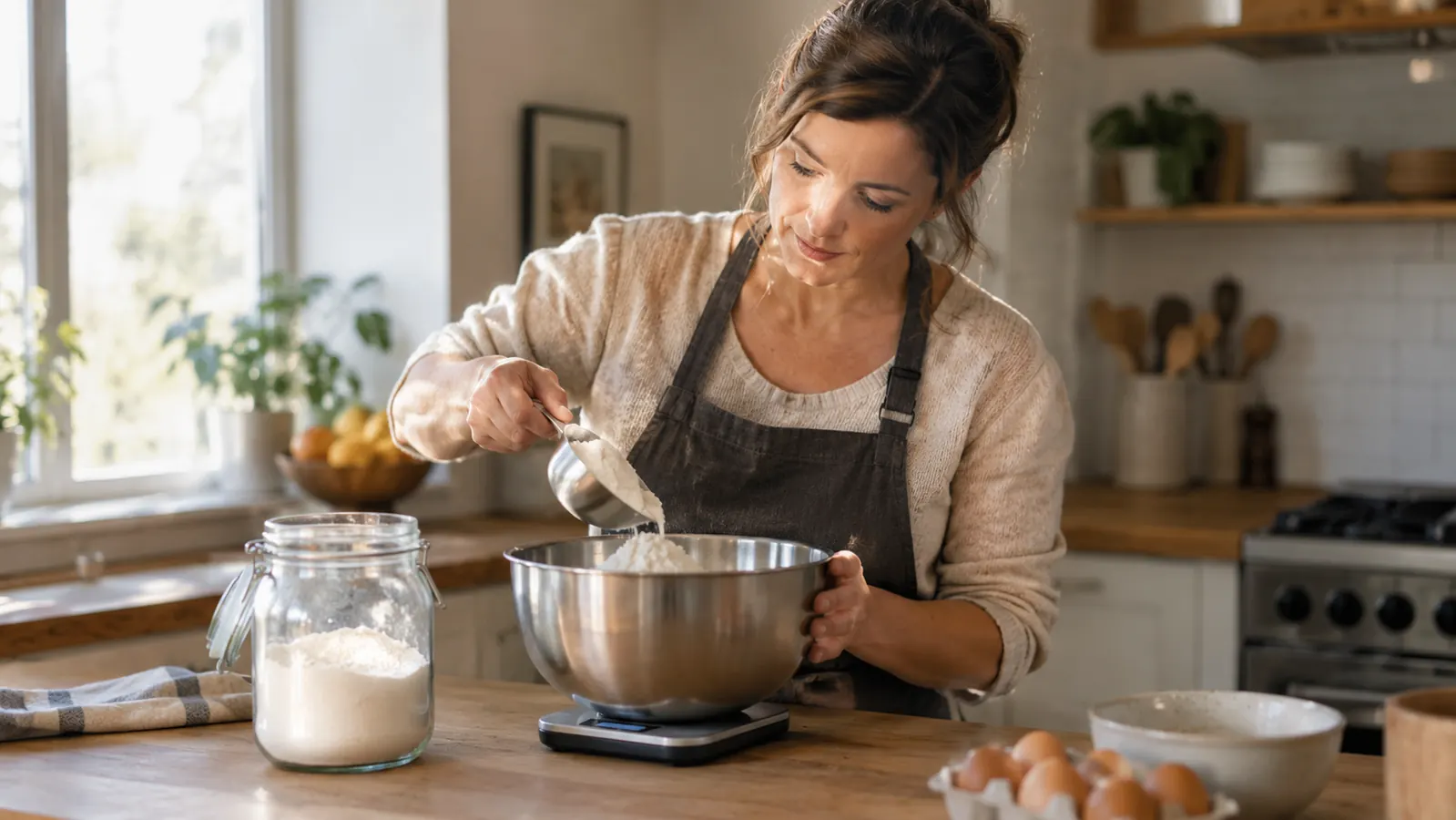
I bought the Escali Primo because I was tired of washing a third measuring cup for a quarter cup of oil, and because I had finally admitted that my grandmother's banana bread recipe turned out different every single time. Fifteen years of baking every week, and I was still packing flour into a cup and hoping. The Escali Primo was the first scale I ever bought for myself. It is also the reason I now tell every home baker the same thing: buy a scale before you buy another pan.
This is the honest review I wish someone had handed me before I ordered it. Not a spec sheet, not a list of features, but a real answer to the question I had: is the Escali Primo actually worth it for a home baker with one standard oven and a modest stretch of counter? I have used this scale every week for about a year and a half, through cookies, bread, pastry, bagels, pie dough, and roughly forty batches of school bake sale brownies. Here is what nobody tells you.
The Quick Verdict
The Escali Primo is the rare kitchen tool that quietly changed how I bake. It is not perfect, the buttons are a little flat, the plastic feels light, and you have to learn to trust it. But for most home bakers it is the right scale at the right price, and it earns its cabinet space every week.
Amazon Check Today's Price →The scale that ended my measuring cup guessing
If you bake anything more than once a month, a digital scale is the single fastest upgrade to your results. The Escali Primo is the one I reach for every time.
Amazon Check Today's Price on Amazon →How I've Used It
I keep the Escali Primo on the counter next to my mixing bowls, which is the first thing nobody tells you: a scale only helps if it is already out. Mine lives beside the canisters of flour and sugar, and it gets used at least three times a week. In a year and a half I have weighed flour, sugar, cocoa, chocolate, butter, water, milk, honey, molasses, peanut butter, yeast, salt, and one very stubborn butternut squash that barely fit. I have used it for envelopes and packages too, which the listing mentions, but the honest truth is that it mostly weighs food.
The two-button operation is exactly as simple as it sounds. One button turns it on and tares, the other switches units. I use grams almost exclusively because that is how I read recipes now, but it switches to ounces and pounds when I need it. The tare feature is the one I use constantly: put the bowl on, press tare, add flour, press tare, add sugar, press tare, add cocoa. By the time I am done I have one bowl to wash instead of four. That alone changed my baking routine.
The sealed control panel matters more than I expected. I am a messy baker. Flour dusts everything, cocoa lands on the counter, and melted butter finds its way onto whatever is nearby. I have wiped this scale down more times than I can count, and it still works exactly like it did the day it arrived. The LCD display is easy to read from a normal standing height, which I did not think about until I used a friend's scale with tiny numbers and had to crouch.
One Saturday in March I weighed out the ingredients for a double batch of my grandmother's banana bread, the same recipe that had driven me to buy the scale in the first place. 260 grams of flour, 180 grams of sugar, 115 grams of butter, two eggs, and a cup of mashed banana that I weighed just to see. The batter looked different from the batter I remembered, a little stiffer, a little more predictable. The loaves came out even, and for the first time I could tell myself the recipe was the same as last time, not just close. That is the day the scale stopped being a gadget and started being part of how I bake.
What Nobody Tells You About the Escali Primo
First, the plastic is light and it does not feel like a luxury object. It feels like a well-made tool that costs what it costs. That bothered me for about a week, and then I stopped caring, because it does the job better than the heavy glass and stainless steel scale my sister owns. Hers looks beautiful on the counter and lives in the back of a cabinet because it is a pain to store. Mine sits out, gets used, and gets wiped down. A tool you use is better than a tool you admire.
Second, the buttons are not clicky. They are flat membrane buttons under the sealed panel, and they take a firm press. Visitors to my kitchen always press too lightly at first and think the scale is broken. You get used to it in a day. The sealed panel is the reason the buttons feel that way, and it is also the reason the scale survives my flour dust, so I consider it a fair trade.
Third, the auto shut off will catch you eventually. The scale turns itself off after a period of inactivity, which is a good feature for battery life and a frustrating one when you step away mid-recipe and come back to a blank display. I have learned to weigh everything I need before I start mixing, or to just press the button again when I return. It takes two seconds. It is not a reason to skip this scale, but it is a reason to know it is coming.
Fourth, and this is the one that actually matters: the readout shows whole grams, not tenths. For baking, that is plenty. For weighing a single gram of yeast, it can feel coarse, and for something like a diamond or a supplement dose, this is not the scale for you. The listing says readout accuracy of 1 gram and it means it. For a home baker measuring flour, sugar, and chocolate in quantities of 50 to 500 grams, that is exactly the precision you need and none of the fuss you do not.
The other thing nobody tells you is that the tare button changes how you clean up. I used to line up four measuring cups and a liquid measuring cup for a single batch of brownies, and every one of them needed washing. Now I put the bowl on the scale, press the button, and add ingredients one at a time. On the Tuesday I made forty brownies for the school bake sale, I weighed everything into one bowl, then weighed the pan of batter to make sure each of the twenty pieces would be close to equal. My daughter Nora cut them and said it was the first time the corner pieces and the middle pieces looked the same size.
Nobody tells you that the real change is not the accuracy, it is the cleanup. One bowl, zero measuring cups, and a scale you can wipe down in five seconds.
What the Escali Primo Gets Right
The Escali Primo gets the fundamentals right, which is rarer than it should be. It reads in 1 gram increments up to 11 pounds, which covers everything I bake. The tare function is instant and reliable. The display is large enough to read without glasses, which I appreciate more every year. And the whole thing runs on the kind of simple operation that means I never have to think about the scale, I just use it.
The 5 year limited warranty is also genuinely reassuring. I have only needed to think about it once, when I dropped the scale onto a tile floor and it landed on its corner. It kept working, which tells me the light plastic is sturdier than it looks. I cannot tell you what the warranty process is like because I have never had to use it. But knowing it is there made me feel better about buying a digital scale in the first place.
The item weight of 431 grams matters more than you think. It is heavy enough to stay put when you press the tare button, and light enough to tuck into a cabinet or a drawer. It does not slide around the counter, and it does not take up the kind of space that makes you hide it away. For my modest stretch of counter, that balance is exactly right.
Where the Escali Primo Falls Short
The honest list of cons is short but real. The buttons feel flat and need a firm press. The plastic body shows the occasional smudge and does not look like a design piece. The auto shut off can interrupt a slow recipe. And if you are the kind of baker who wants to weigh directly into a huge mixing bowl, the 11 pound capacity might feel tight once the bowl is on top. I have never hit that limit in normal baking, but I have come close with a big batch of bread dough.
The biggest limitation is not the scale at all, it is the habit. A scale only helps if you use it, and using it means rewriting the way you have baked for years. I still occasionally reach for a measuring cup out of pure muscle memory. The Escali Primo cannot fix that. What it can do is make the new way so easy that the old way starts to feel like a hassle.
The closest I have come to the 11 pound limit was a triple batch of pizza dough for Ben's birthday. The bowl alone took up a good chunk of the capacity, and by the time the flour and water were in, the readout was past 10 pounds and I was watching the number climb. It handled it, but I had to weigh the flour in two additions and keep an eye on the display the whole time. For a normal batch, even a big one, there is no issue. For the occasional giant batch, you just split it, which is what I do now without thinking.
What I Liked
- Two-button operation that takes a day to learn and a lifetime to forget
- Sealed control panel survives flour, cocoa, and melted butter
- Tare function turns one bowl into a full mixing station
- Reads in 1 gram increments with an 11 pound capacity
- 5 year limited warranty and a light, easy-to-store body
Where It Falls Short
- Flat membrane buttons need a firm press
- Auto shut off can interrupt a slow recipe
- Whole gram readout is too coarse for tiny amounts
- Light plastic does not look like a design piece
How It Performed Over a Year and a Half
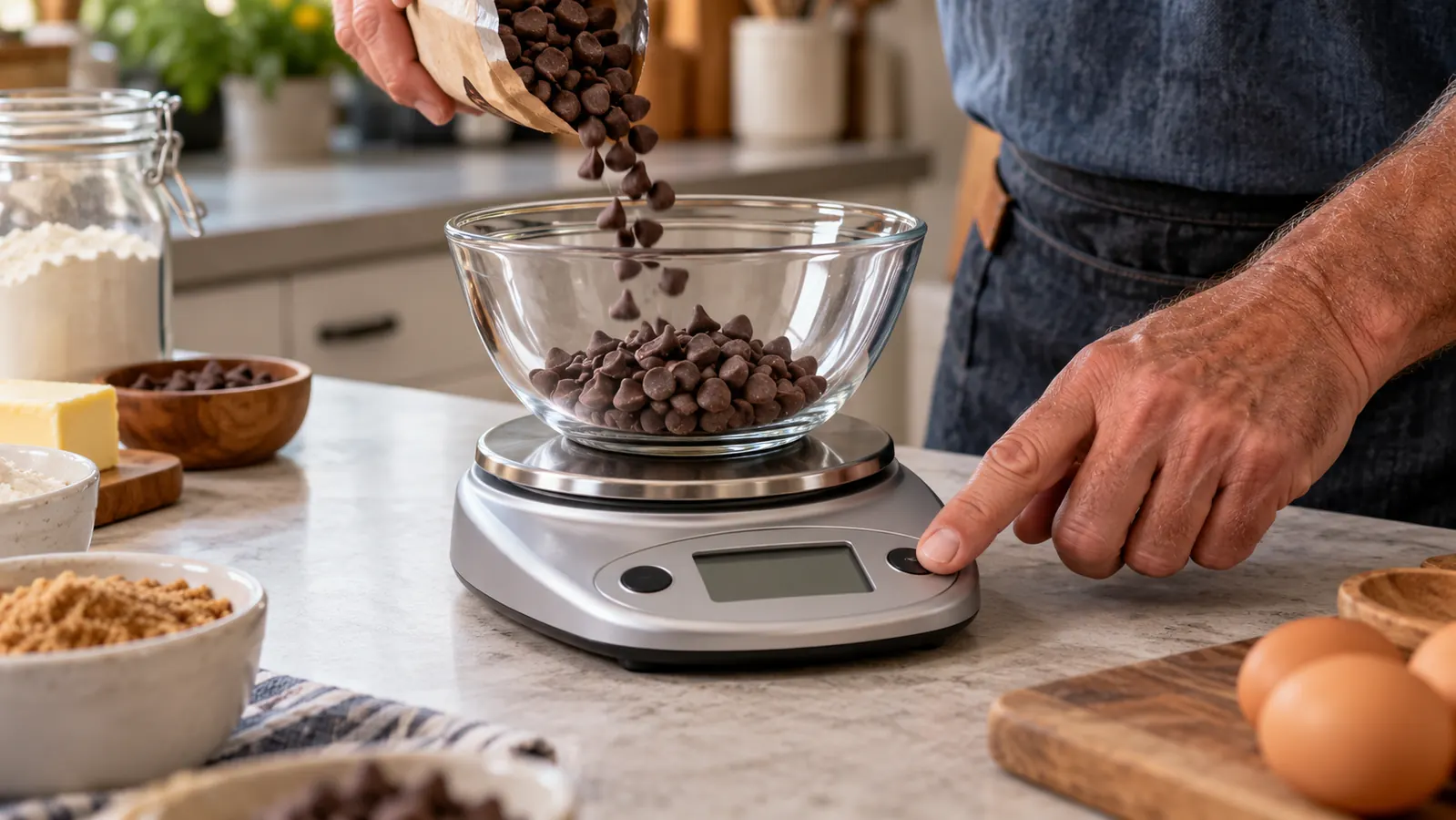
I have a confession: I did not keep a spreadsheet. What I have is a memory of specific bakes. The first time I weighed flour instead of scooping it, my usual bread recipe made a dough that felt different, more consistent, easier to handle. The first time I weighed chocolate for cookies instead of chopping a bar and hoping, the cookies came out the same as the batch before. That sameness is the whole point. I bake for coworkers and for the school bake sale, and people started asking what I had changed.
The Escali Primo has been through a Wisconsin winter and a humid summer, which is more of a test than it sounds. It has sat in a warm kitchen while the oven ran at 425 degrees. It has been dusted with flour, splattered with batter, and once accidentally left under an open bag of powdered sugar. Every time, I wipe it down and it reads correctly on the next use. The sealed control panel is the feature I would not give up.
Battery life has been excellent. I cannot tell you exactly how often I change it because the answer is almost never. The auto shut off clearly does its job. I keep a spare battery in the drawer anyway, because I have learned that the one time you do not have a spare is the one time you need it.
The clearest proof came in the first week of January, when I made the same chocolate chip cookie recipe twice in three days. The first batch I weighed, the way I do now. The second batch I scooped flour into a measuring cup the way I used to, just to see what I was missing. The weighed batch spread evenly and came out the same as every weighed batch before it. The scooped batch was a little puffier, a little less predictable, and the cookies baked unevenly across the two sheets. Nobody at work said anything, but I knew. I gave the scooped batch to Tom and told him it was a science experiment.
Who This Is For
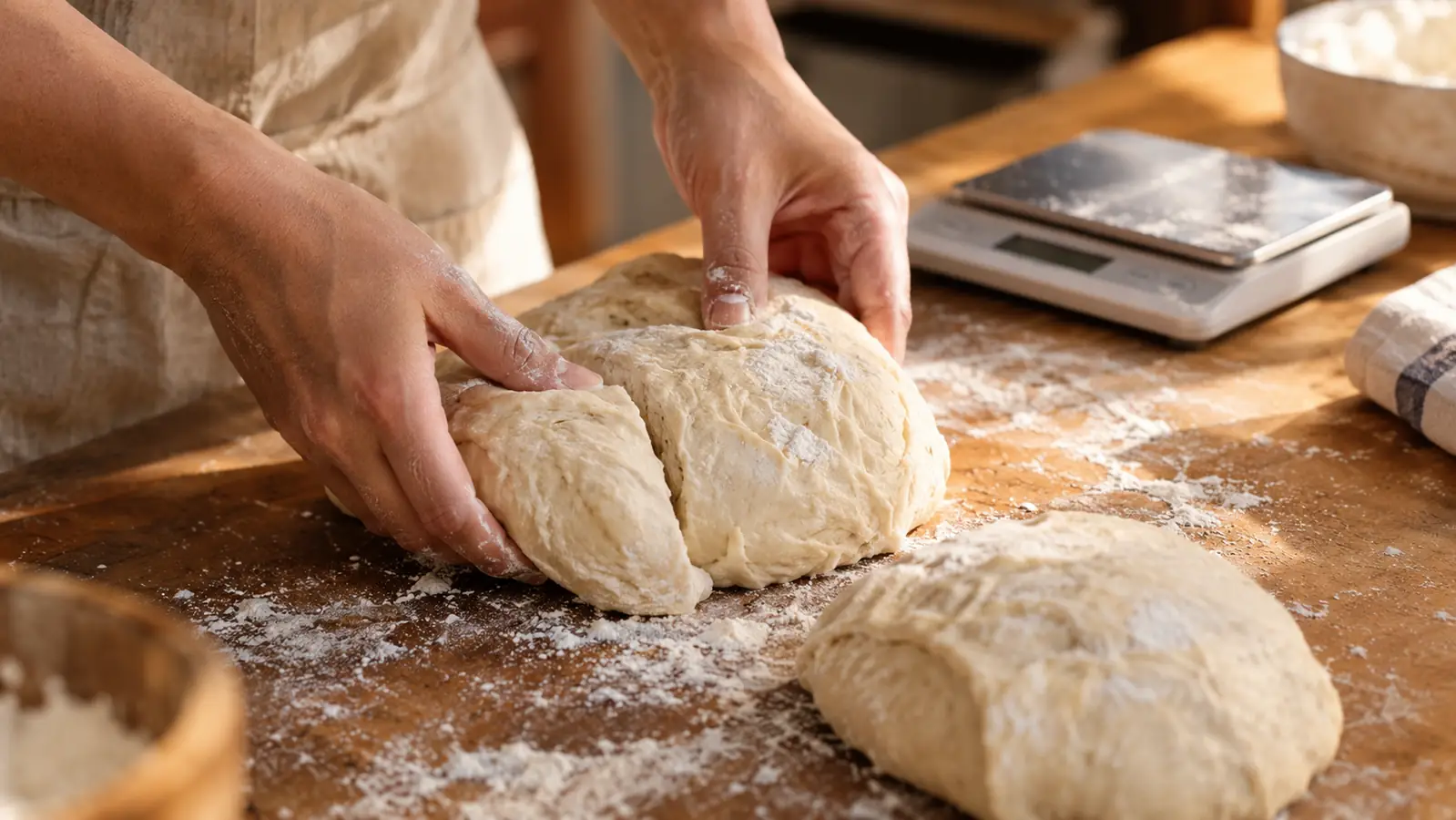
The Escali Primo is for the home baker who is starting to take results seriously. If you bake the same banana bread every month and you are tired of never knowing which version you will get, this scale will fix that. If you are moving from measuring cups to a recipe that lists ingredients in grams, this is the scale that makes that transition painless. If you bake bread, this is the tool that finally tells you what 500 grams of flour actually looks like.
It is also for the baker who does not want to think about their equipment. The Escali Primo has two buttons. There is no app, no learning curve, no ritual. You put a bowl on it, press the button, and weigh. For anyone who wants consistent results without a gadget that demands attention, this is the right tool.
Who Should Skip It
Skip the Escali Primo if you need to weigh tiny amounts with precision beyond whole grams. It reads in 1 gram steps, and if your baking or cooking regularly calls for a fraction of a gram, you want a scale with finer resolution. Skip it if you routinely weigh more than 11 pounds of ingredients at once, though I struggle to imagine a home recipe that needs that. And skip it if you want a scale that looks like a piece of modern sculpture on your counter. The Escali Primo is a tool, not a decoration, and it looks like one.
Also skip it if you know you will not leave it out. The whole value of a scale is that you reach for it without thinking. If your counter is too full to keep one out, no scale will help you, and the Escali Primo will just become another thing in the cabinet. I keep mine out, and that is the real reason it changed my baking.
Still using measuring cups? This is your sign to stop.
The Escali Primo is the scale I have used every week for a year and a half. It is simple, it is accurate to 1 gram, and it cleans up in seconds.
Amazon Check Today's Price on Amazon →