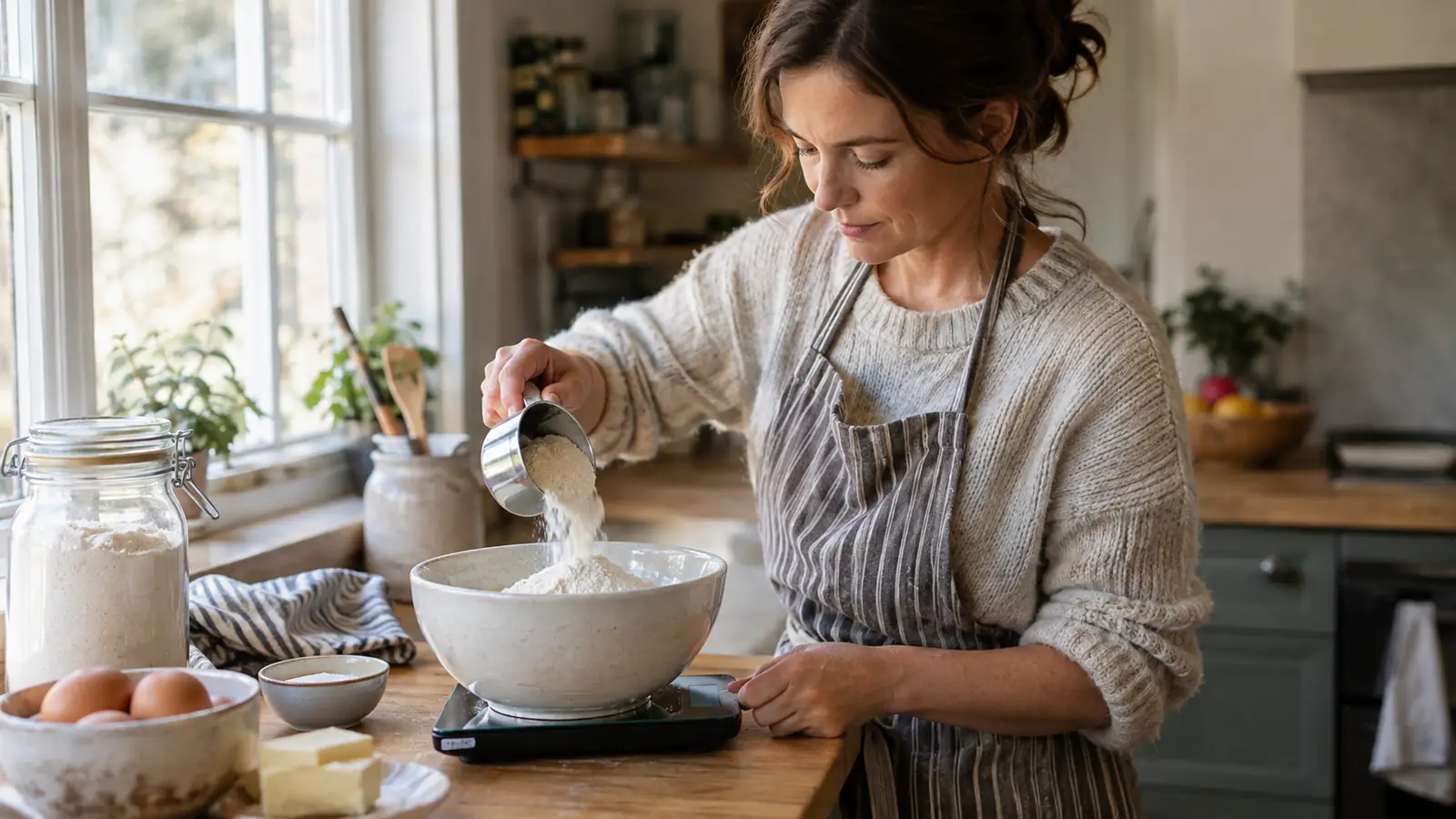
I have a confession to make: I baked for years without weighing a single ingredient. My grandmother's recipes all said 'cups' and 'teaspoons,' and they worked, mostly. Then I started making bread that called for 450 grams of flour instead of 3 1/2 cups, and my loaves came out different every single time. The culprit wasn't my oven. It was my measuring cups. When I finally bought the Escali Primo digital scale, I expected a small improvement. What I got was a different way to bake.
The ten reasons below are the ones I actually think about, in the order they matter to me. Some are about better bread, some are about a cleaner kitchen, and one or two are about not having to do math at seven in the morning. If you're on the fence about buying a scale, I hope one of these lands for you.
The scale that changed how I bake
I've used the Escali Primo for over a year, and it's the one tool I'd replace the same day if it broke. It reads to the gram, handles up to 11 pounds, and the two-button operation is so simple I can use it before coffee. The sealed control panel means flour and honey wipe right off.
Amazon Check Today's Price on Amazon →1. Flour settles, and cups lie
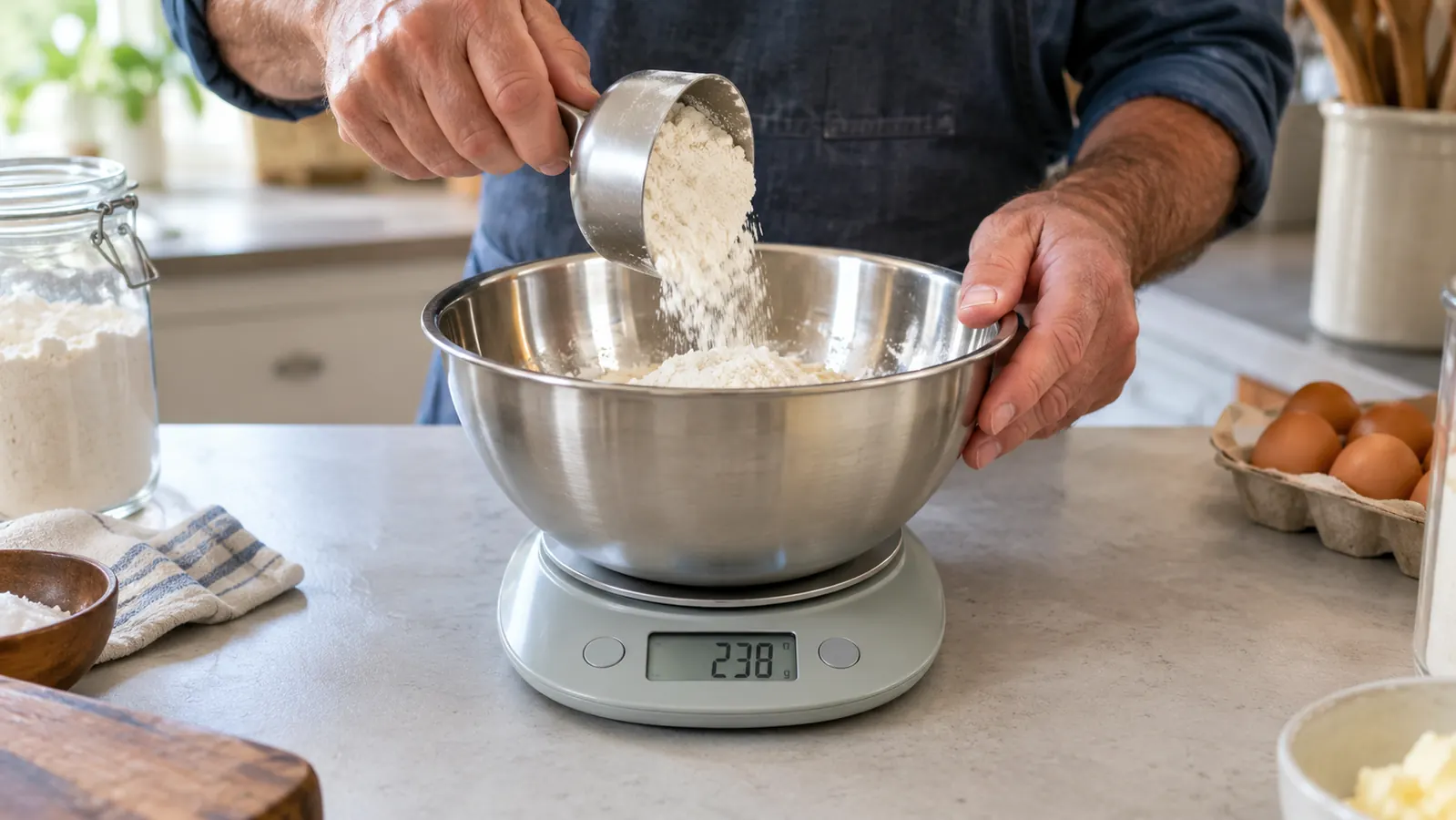
A cup of flour can weigh anywhere from 120 to 150 grams depending on how it was scooped, sifted, or settled. That 20 percent swing is the difference between a tender cake and a tough one. Weighing takes the guesswork out. The Primo reads to the gram, so I get the same flour weight every time, even when I'm using a different bag or a different brand. It's the single biggest reason my cookies look the same from one batch to the next, and it's the reason I stopped reaching for my measuring cups altogether.
2. Fewer bowls, less washing up
With the tare function, I put my mixing bowl on the scale, press the button to zero it, add flour, zero it again, add sugar, zero it again. One bowl for six ingredients. The Primo's tare button is the second of its two buttons, and it's the one I press most. My sink agrees with this reason. I also tare the bowl of a stand mixer when I'm making a double batch, which saves me from washing a second bowl entirely. It sounds small, but after a full day of holiday baking, it's the difference between a pleasant evening and a long one.
3. Sticky ingredients stop being a fight
Honey, molasses, peanut butter: measuring them in a cup means scraping and guessing. On a scale, I put the jar on, zero it, squeeze out the honey, and the display tells me exactly how much came out. No sticky cup, no 'close enough.' The sealed control panel on the Primo means a stray drip wipes right off, and the tare button lets me measure honey straight into the bowl. I used to avoid recipes that called for molasses. Now I make them on purpose.
4. Consistent bread, every single time
Bread dough is unforgiving. A 2 percent change in water changes the crumb. Weighing water and flour to the gram is the difference between the loaf I made last Tuesday and the one I made in March. The Primo's 1-gram readout is precise enough for any recipe I've tried, and its 11-pound capacity handles a full batch of dough without maxing out. My bread has never been this consistent, and my family has stopped asking why the loaves look different.
5. Recipes from other countries stop being a puzzle
European and professional recipes measure in grams. Before the scale, I'd Google conversions and hope. Now I just read the gram amount and weigh it. The Primo's LCD display shows grams clearly, and the 1-gram readout is all I need. I've made French baguettes and German rolls without a single conversion chart, and they came out right the first time. It opened up a whole shelf of cookbooks I'd been ignoring because the math felt like too much work.
6. It's easier to scale a recipe up or down
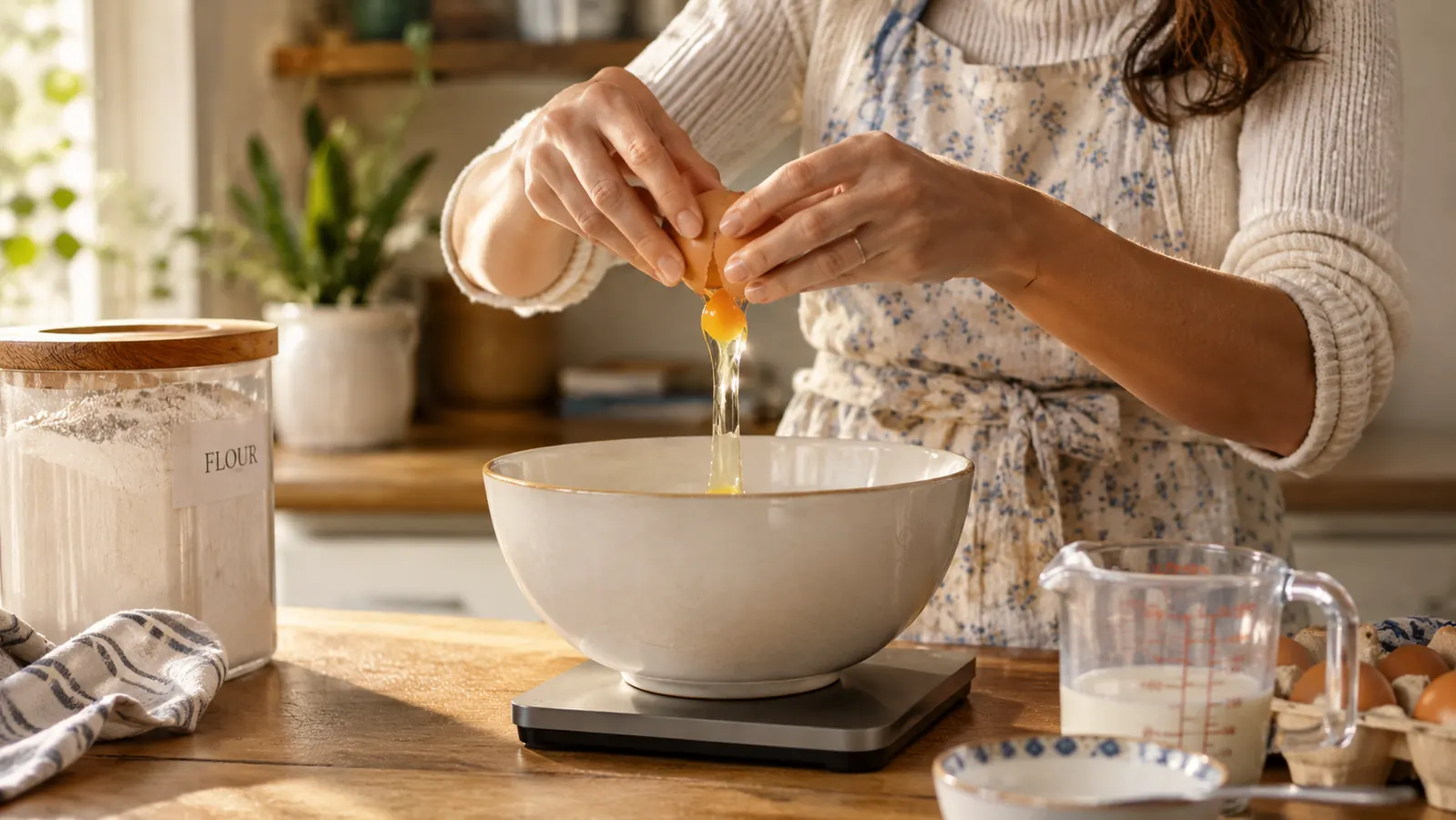
When I want half a batch of cookies or double a cake, weights divide cleanly. 225 grams of butter is half of 450 grams. 1 3/4 cups of sugar is not half of 3 1/2 cups, at least not in my head at 6 a.m. The Primo makes the math disappear: I weigh the full amount once, then weigh each portion as I go. Scaling a recipe used to feel like a test; now it feels like subtraction. That matters when you're baking for a bake sale and need exactly two dozen, not three.
7. No more packing and unpacking brown sugar
Brown sugar is the worst thing to measure in a cup because you have to pack it, and everyone packs differently. On the scale, I just add sugar until the display shows the gram weight. The Primo's tare function means I can add it right on top of the butter and still read the sugar amount alone. That one feature has saved me more time than any other part of this scale. I no longer dread recipes that start with a cup of brown sugar, which used to be my least favorite way to begin a bake.
8. The scale doubles as a portion checker
I use the Primo for more than baking. It weighs envelopes before I mail them, packages before I ship them, and the occasional snack when I want to know what a serving actually looks like. The specs list envelopes and packages as recommended uses, and I've tested both. It's the only kitchen tool that also lives near my desk for a week after every bake sale. The tare function makes it just as easy to weigh a stack of envelopes as it is to weigh a cup of flour.
9. It takes up almost no room
The Primo is slim enough to live against the back of my counter, and at 431 grams it's light enough to move one-handed. I keep it next to the flour canister, and because it has auto shut-off, I never worry about leaving it on overnight. The LCD display turns off by itself, which means the battery lasts for months instead of weeks. That's the kind of small detail I notice after a year of daily use. It's always there when I need it, and it never gets in the way.
10. It's built for daily use, not just holidays
I've dropped this scale, spilled flour on it, and left it under a bag of sugar. The sealed control panel keeps the buttons working, and the plastic body has survived a year of regular baking. The two-button operation means there's nothing to break. It's the rare kitchen tool that earns its spot on the counter rather than hiding in a drawer, and the five-year limited warranty tells me Escali expects it to last. I believe them.
What I'd Skip
Honestly, you can skip the scale if you only bake from a handful of recipes you've made a hundred times and you like the results. Measuring cups work fine when you've learned exactly how you scoop. But if you're branching out, baking bread, or trying recipes from other sources, the scale will save you more frustration than any other tool in the kitchen. And skip any scale with more buttons than this one: the Primo's two-button design is the reason it's still on my counter instead of in a drawer.
Weighing water and flour to the gram is the difference between the loaf I made last Tuesday and the one I made in March.
Weigh once, bake better forever
The Escali Primo is the scale I recommend to anyone who asks, and the one I'd buy again tomorrow. It reads to the gram, tares in one press, and cleans up with a wipe. If you bake more than once a month, this is the tool that earns its cabinet space.
Amazon Check Today's Price on Amazon →