Last February I pulled a chocolate layer cake out of my oven, waited for it to cool, and watched it sink in the middle like it had given up. It was for a coworker's birthday, the one who always brings the good coffee, and I had promised her my grandmother's chocolate cake. What I delivered was a dense, damp slab that tasted fine and looked apologetic. I told myself the oven was lying to me again.
That was not a new excuse. I bake every week, have for about fifteen years, and for most of that time I blamed my one standard electric oven for every flat souffle and heavy loaf. I bought an oven thermometer. I rotated pans. I even borrowed a coworker's Escali scale for a weekend and sent it back, because I was not ready to admit the problem was me. I tested cakes with a toothpick until I had poked holes in things that were never going to be light. The cakes still came out dense more often than I wanted to admit, especially in winter, and I had decided that was simply the price of baking in a regular kitchen.
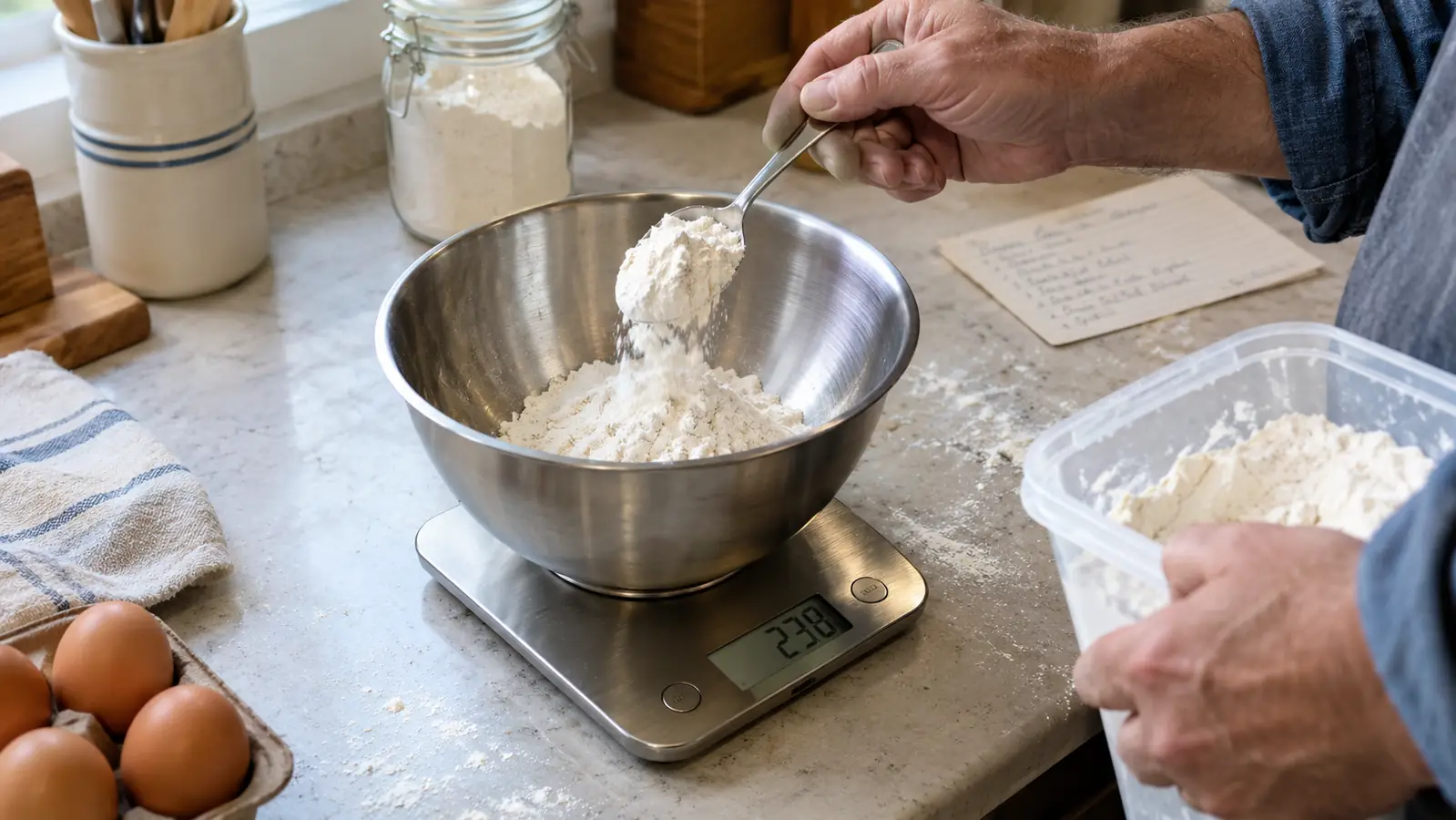
Then a baker I respect said something that landed like a thud. She asked how I measured flour. I said cups, obviously, the way my grandmother's recipe cards say. She pointed out that a cup of flour is not a cup of flour: scoop it, and it can weigh four ounces. Sift it, and it can weigh closer to four and a half. Spoon it gently, and you can hit five. My grandmother's 'one cup' had never once been the same cup twice, and my dense cakes were not the oven's fault. They were my flour's fault.
The fix turned out to be a small digital scale that cost less than a bag of good chocolate. I chose the Escali Primo because it was simple: two buttons, an LCD readout, a tare function that resets the weight to zero between ingredients, and a sealed control panel that survives flour dust and the occasional splash of vanilla. It reads in 1 gram increments up to 11 pounds, which covers every batch I make. It weighs 431 grams itself, so it takes up almost no room on my pantry shelf.
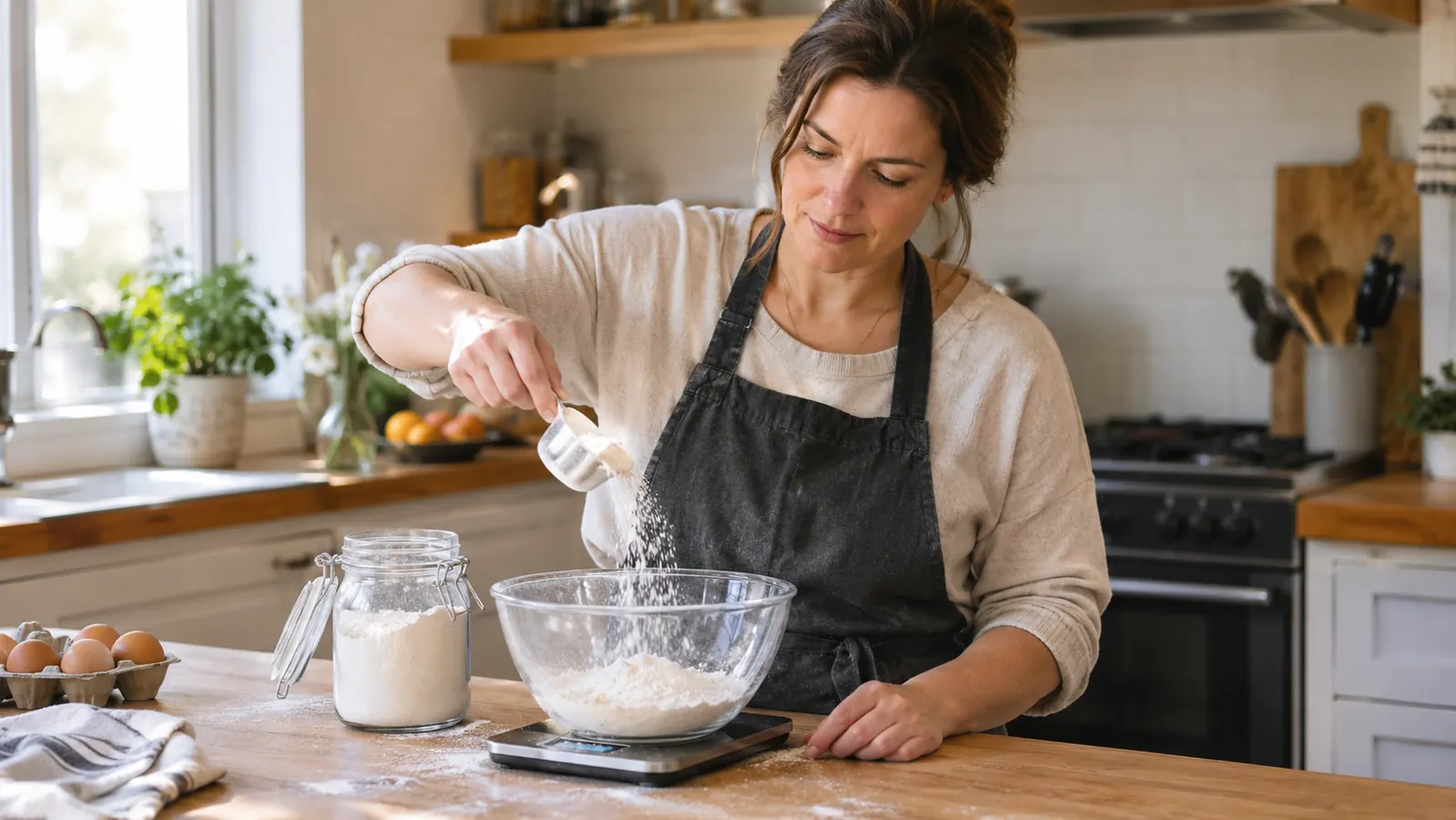
The first Saturday I used it, I made the same chocolate cake. Bowl on the scale, hit tare, add flour until the readout says 240 grams, tare again, add sugar, tare, add cocoa. It took longer to explain than to do. The batter looked different, thinner, more like the cake batter in the photos I had never quite matched. The cake came out level. Not flat, level, with a crumb I could actually see instead of a paste.
The same chocolate cake that sank in February came out level in March. The only thing I changed was weighing the flour.
The scale that finally made my grandmother's recipes repeatable
The Escali Primo is a two-button digital scale with a tare function, a sealed control panel, and a readout in grams. It has earned permanent counter space in my kitchen, and it will show up in your cakes long before any new mixer will.
Amazon Check Today's Price on Amazon →I did not stop with the chocolate cake. I converted my grandmother's recipe cards to grams, which took an evening and a stack of sticky notes, and I started weighing everything that could be weighed: flour, sugar, cocoa, peanut butter, even the mashed banana in my banana bread. The scale's tare button became my favorite kitchen move because it means I can add five ingredients to one bowl and never wash a measuring cup mid-recipe.
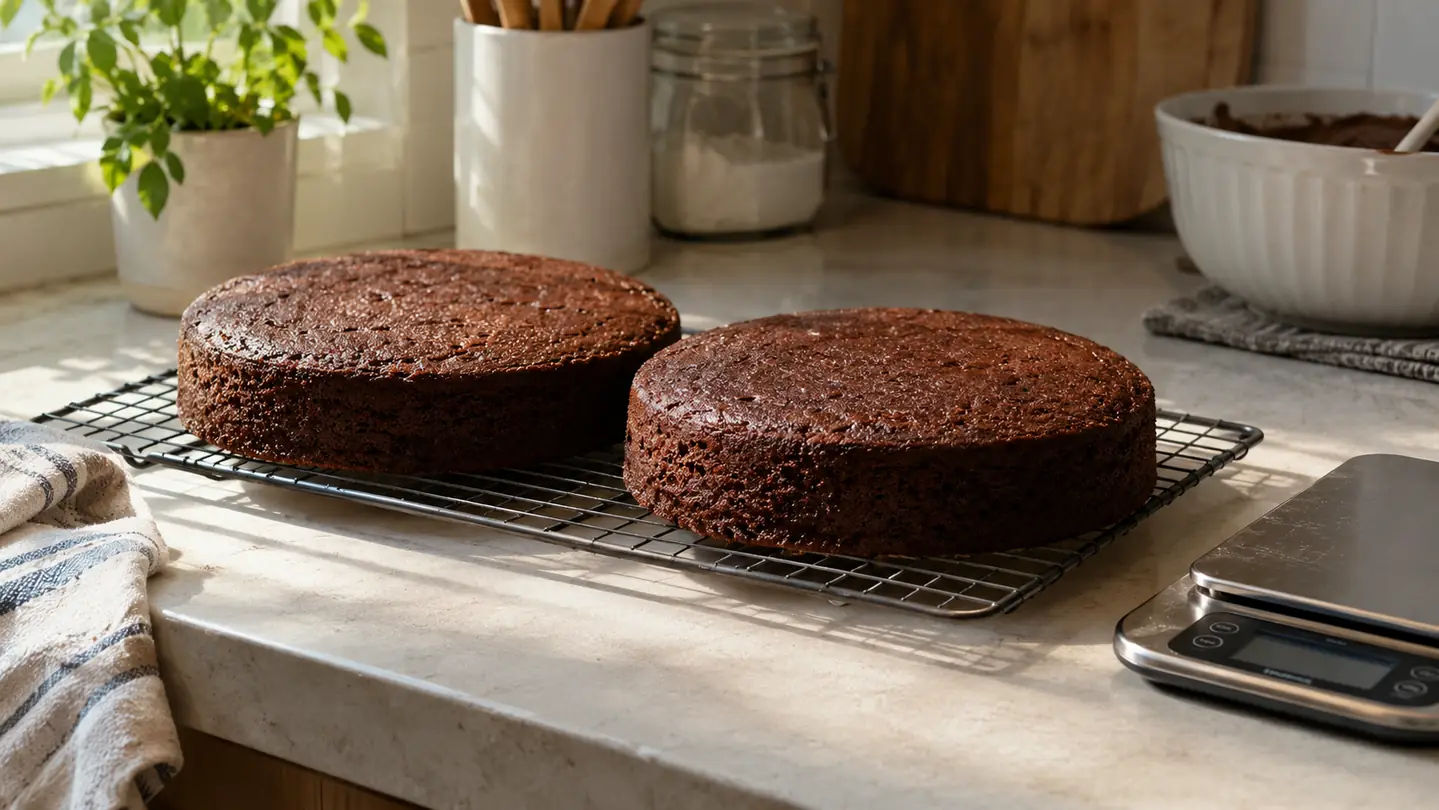
The results were not dramatic in the way a new oven would be dramatic. They were better in a quieter way: the same banana bread recipe that gave me a brick in February gave me a tall, tender loaf in March. The cookie dough that used to spread into one giant cookie now spreads the way the recipe intended. My coworkers stopped asking what was wrong and started asking what I changed, and for a while I told them it was the oven, because I did not want to admit I had been the problem for fifteen years.
Now the scale lives on the counter, not the pantry shelf, which is the highest compliment I can pay a kitchen tool. It has survived a school bake sale where Nora and I weighed out sixty portions of dough, a spilled bag of powdered sugar that I wiped off the sealed panel with a damp cloth, and the general chaos of a two-story house with two teenagers and one oven. The auto shut-off saves the battery on the days I forget to turn it off, which is most days.
I will be honest about what it will not do. It will not fix a recipe that is wrong, it will not make a cold kitchen behave like a proofing room, and it will not turn a beginner into a professional. What it does is remove the one variable I did not know I had: my own hands. If your cakes are dense and you have already blamed the oven, the flour, the pans, and the recipe, weigh the flour before you buy a new mixer or a fancier pan.
What I'd Tell You If We Were Sitting at My Kitchen Table
Here is the honest version, the one I would say while you waited for the oven to preheat. You do not need a scale that talks to your phone or does math for you. You need one that is accurate, easy to clean, and simple enough that you will actually use it at 6:45 on a Tuesday morning before work. The Escali Primo is all three. It has two buttons and a tare function and a sealed control panel, and it reads in grams, which is the only unit that matters for baking. Buy it for the flour, keep it for the peanut butter, and give your measuring cups to the kids for their play kitchen. Your cakes will not be dense anymore, and neither will mine, and that is the whole story.
Skip the new mixer. Weigh your flour first.
The Escali Primo has lived on my counter for over a year, and it is the fix for dense cakes that actually worked. Two buttons, 1 gram accuracy, and a tare button that does the thinking.
Amazon Check Today's Price on Amazon →