
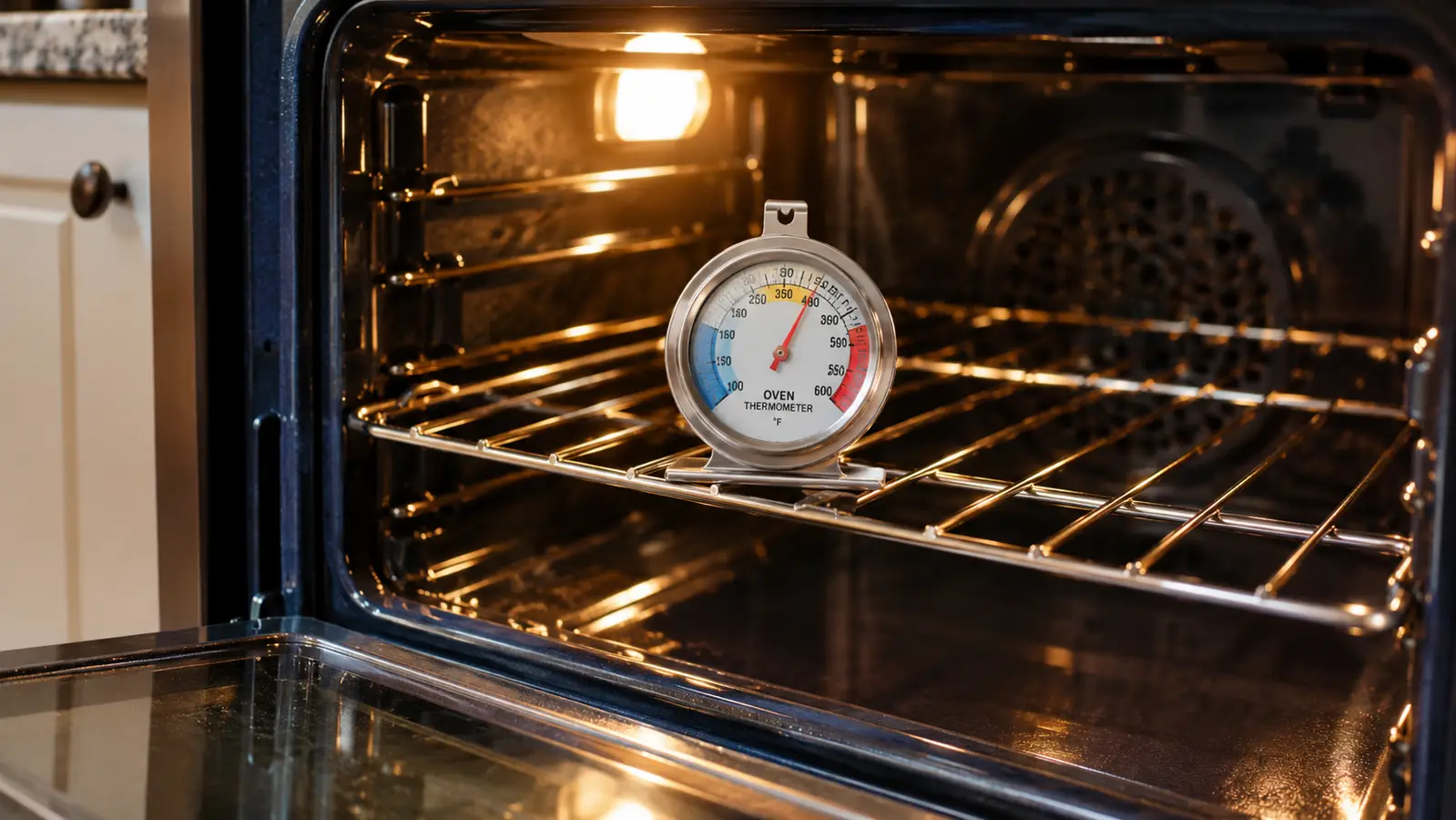
I have baked every week for about fifteen years, and for most of that time I trusted the number on the oven dial the way I trust the clock on the microwave. Then my banana bread started coming out pale on the bottom and scorched on top, and my sugar cookies spread into one flat sheet no matter how long I chilled the dough. I checked the yeast, I checked the butter temperature, I checked my own patience. Finally I bought a Taylor analog oven thermometer and set it on the middle rack, and within one afternoon I learned that my oven, set to 350, was actually running at 325 for the first forty minutes and 375 after the heating element cycled back on.
This is the long-term review I wish someone had handed me before I started. I am Marisa, a home baker in Madison, Wisconsin, and I have used this Taylor thermometer in the same standard electric oven for about six months, through cookies, bread, pastry, casseroles, and one very stubborn birthday cake. My husband Tom and our two teenagers have eaten every test batch, so the evidence is well tested. It is a simple tool: a 3 inch analog dial, stainless steel, no beep, no app. Here is what it actually does, where it falls short, and whether you need one.
The Quick Verdict
A cheap, honest reality check for any home oven. It will not fix your oven, but it will finally tell you the truth about your preheat, your hot spots, and why your bake times wander.
Amazon Check Today's Price →Your oven is probably lying to you. Here is how to catch it.
The Taylor analog oven thermometer reads from 100 F to 600 F, so it covers everything from a slow roast to a hot bread bake. Set it on the middle rack, preheat, and see what your oven is really doing.
Amazon Check Today's Price on Amazon →How I've Used It
I keep the Taylor thermometer on the middle rack of my oven, pushed toward the back so it does not get in the way of a sheet pan. The day it arrived, I set the oven to 350 and watched the dial. It took about twelve minutes to reach 325, then crept to 350 around the fourteen-minute mark. My oven's preheat light had clicked off at nine minutes. That nine-minute gap explained a lot of my baking problems. I actually laughed out loud when I saw it, because I had been blaming my recipes for months.
Since then I have used it three ways. First, as a preheat check: I wait until the thermometer shows the set temperature before I put anything in, which has added a few minutes to most bakes and saved several batches. Second, as a hot-spot finder: I moved it around the racks for a few days and learned that the back-left corner of my oven runs about 25 degrees hot. Third, as a sanity check on the oven dial itself, which I now know runs low. I have not replaced the dial, because the thermometer is easier and cheaper than a repair visit. On the top rack, the same set temperature reads closer to 360, so I rotate pans more often than I used to.
The thermometer is fully analog, with a large, colorful dial and clearly marked optimal cooking zones. The markings are the feature I use most: I can glance at the dial and see at a glance whether I am in the right range for a slow roast or a hot oven, without reading a number twice. There is no beep and no screen, which is exactly why I trust it; the needle just sits there and tells the truth. When I open the door to check on a bake, I read the needle fast, close the door, and let the oven recover for a minute before I judge the number.
What the Specs Actually Tell You
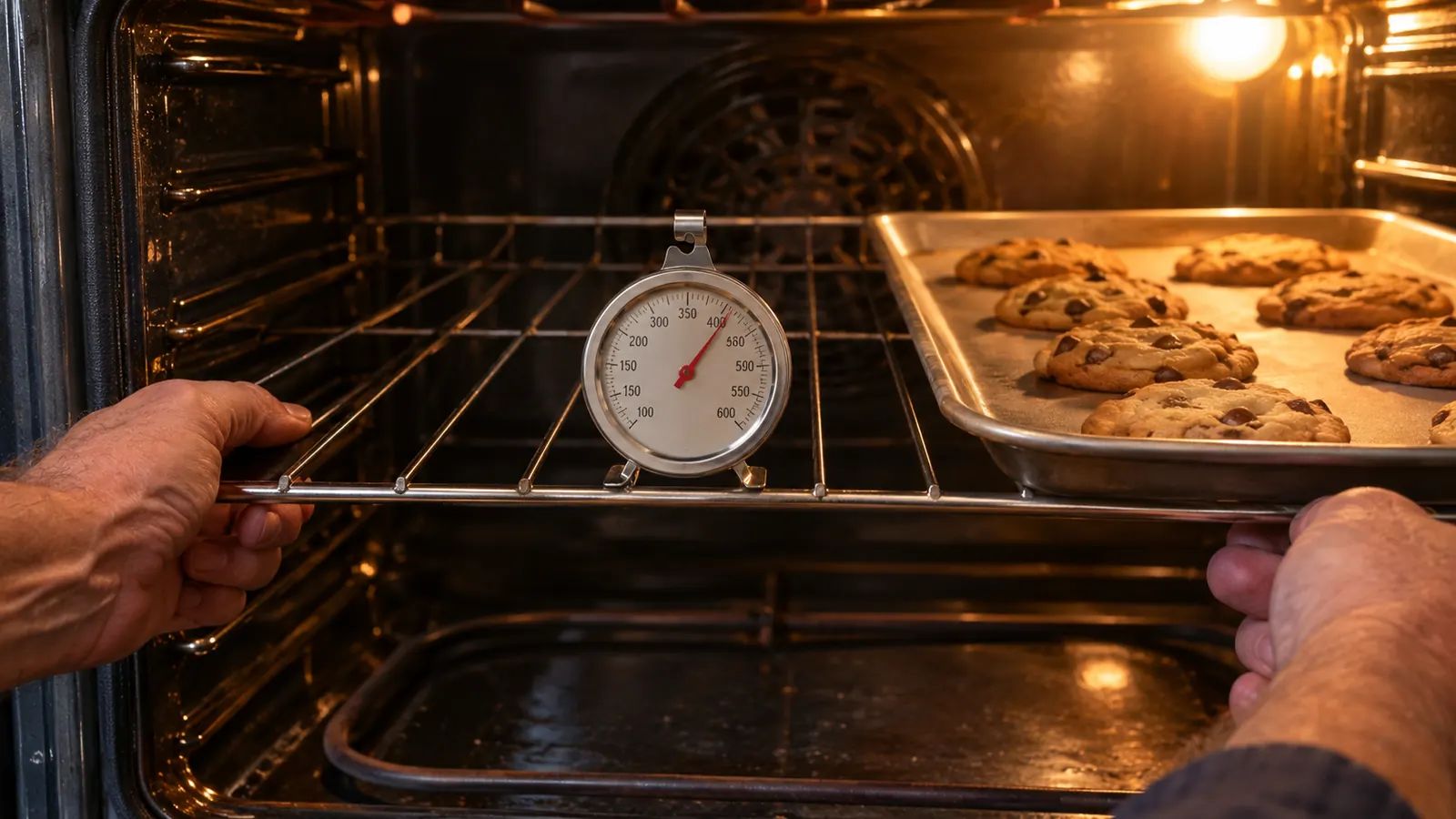
The Taylor thermometer reads accurately from 100 F to 600 F and 50 C to 300 C, which covers every cooking method I use at home. The lower end matters more than people expect: a proofing corner, a slow roast, or a barely warm oven for keeping a finished cake safe are all in that lower range, and a lot of cheap thermometers stop being useful below 200 F. This one keeps answering all the way down. I tested the low end once by setting my oven to its warm setting and watching the needle settle near 150 F, which is exactly where I want it for proofing bread dough on a cold morning. Taylor lists high accuracy as a feature, and in my testing the needle matched my probe thermometer within a few degrees once the oven settled.
It is built with sturdy stainless steel, with an outer material of glass and stainless steel and an inner material of stainless steel. It weighs 2.88 ounces, so it sits on a rack without bending it, even on the thinner top rack. The response time is listed as 500 milliseconds, which means the needle moves quickly when you open the door and set it in a new spot. It is not instant, but it is fast enough that I never find myself waiting on it. The glass face is easy to wipe clean, and the stainless body has not rusted or warped after six months of regular use.
The included components are just the thermometer and an instruction manual. There is no case, no clip, no magnet, no stand. I set it on the oven rack near the back, and when it is not in use it lives on the shelf next to my sheet pans. The care instructions are simple and specific: do not put it in the dishwasher. I wipe it with a damp cloth and dry it, and six months in it still looks new. The lack of extra parts is actually a feature; there is nothing to lose, break, or misplace.
What It Changed in My Baking
The biggest change is that I stopped blaming my recipes. My sugar cookies stopped spreading into one sheet once I started waiting for the thermometer to hit 350 instead of trusting the beep. My bread crust stopped over-browning on top while the middle stayed doughy. The loaf I baked last Sunday was the first one in months where the bottom crust and top crust came out the same color, and I did not rotate the pan once. My daughter Nora asked why the bread looked better, and I told her the oven had been lying to us the whole time.
It also changed how I think about preheating. I used to put a pan in the moment the oven beeped, because the beep felt like permission. Now I treat the beep as a suggestion and the thermometer as the truth. On a cold day, or when the oven has been off for hours, the gap between beep and true temperature is wider. The thermometer catches that every time. The birthday cake I mentioned was for Nora, and it used to dome in the center and sink when it cooled. The last one, baked after I started trusting the thermometer, came out flat on top and moist all the way through.
The large, colorful dial with clearly marked optimal cooking zones is the part I underestimated. I thought it would be a gimmick, but it genuinely helps. When I am moving fast between two baking projects, I do not need to read the exact number; I need to know whether I am in the right zone for what is going in next. The zones give me that at a glance. I also use it for casseroles. A green bean casserole that used to take 45 minutes now takes 55, but it comes out bubbling evenly instead of burnt at the edges and cold in the middle.
The day I put the Taylor thermometer on the middle rack, my oven's preheat light clicked off at nine minutes while the thermometer read 325. That nine-minute gap explained more about my baking than any recipe book I own.
Where It Falls Short
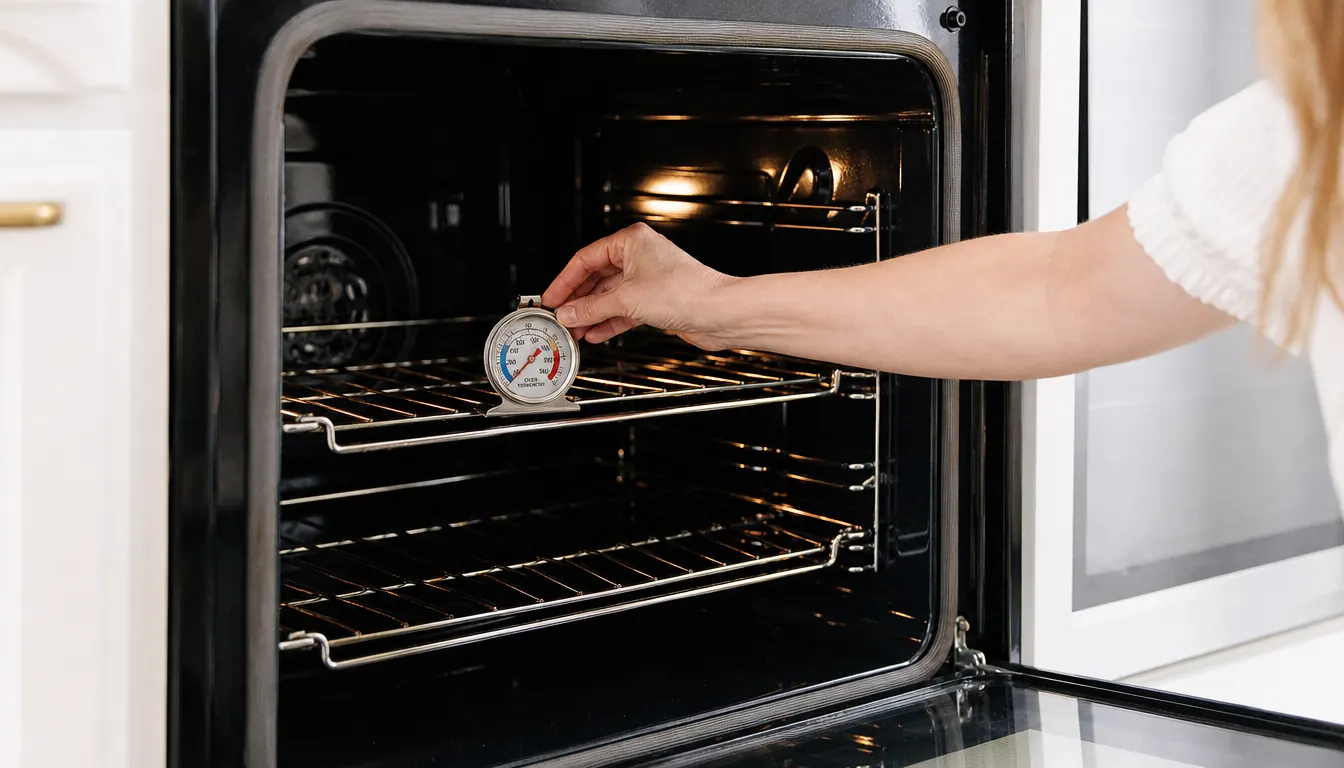
It is not a leave-in meat thermometer and it is not a probe. It tells you the air temperature inside the oven, not the internal temperature of your roast or your bread. For that you need a separate probe thermometer, and if you want both jobs done by one device, this is not it. I keep a probe thermometer for chicken and pork, and the Taylor stays on the rack doing the job it does best.
The resolution is 50 F, which sounds coarse until you remember that the dial is analog. The needle lands between marks, so in practice I can read it more finely than 50 degrees, but it is not a digital readout. If you want a precise number to the degree, you will find the analog dial charming for about a week and then mildly annoying. I have learned to live with it because the trend matters more than the exact number; I need to know whether the oven is drifting, not whether it is exactly 350 point zero.
It is also only as honest as the moment you read it. Every time you open the oven door, the temperature drops and the thermometer reacts. I have learned to read it fast, close the door, and give the oven a minute to recover before I judge the number. That is true of any oven thermometer, but it is worth knowing before you buy. The care instruction says not to put it in the dishwasher, which is easy to forget when you are cleaning up after a big bake. I keep mine on a shelf near the sheet pans so it does not end up in the sink.
What I Liked
- Reads accurately from 100 F to 600 F, covering slow roasts to high-heat baking
- Large, colorful dial with clearly marked optimal cooking zones
- Sturdy stainless steel body that has held up to six months of daily use
- No beep, no app, no screen to fail or update
- Weighs just 2.88 ounces, so it sits on the rack without bending it
Where It Falls Short
- Analog dial with 50 F resolution, not a precise digital readout
- Measures oven air temperature only, not the internal temperature of food
- Do not put it in the dishwasher, which is easy to forget
- No clip, magnet, or stand, so it can slide around on a bare rack
Who This Is For
Buy this if you bake or roast in a home oven and you have ever wondered whether your dial is telling the truth. It is for the weekend cookie baker whose bottoms burn before the tops set, the bread baker who cannot get a consistent crust, and the person who just wants one less variable in the kitchen. It is also for anyone who has ever opened the oven to check a bake and felt the heat hit their face while the dial insisted the temperature was fine. If that sounds like you, this thermometer will become the first thing you reach for.
If you are starting to take baking seriously, this is the cheapest upgrade you can make. It takes up almost no cabinet space, and it will change how you read every recipe that tells you to preheat to 350. I would rather bake with a mediocre thermometer and a known oven than a fancy oven and no idea what is actually happening inside. My own oven is an older standard electric model, and the Taylor has earned a permanent spot on the rack. I have recommended it to two coworkers, and both came back with the same surprised look I had on day one. It is the rare tool that pays for itself in the first week.
Who Should Skip It
Skip it if you already have a reliable way to measure your oven's true temperature, or if you cook mostly on the stovetop and rarely use the oven. Skip it if you want a digital readout with a probe for your roast, because this thermometer will not do that job no matter how much you want it to. And if you have a newer oven with a digital display that you trust, you may not need this at all.
But if your oven runs true and your bakes come out even, you already have what this tool provides. The pleasure of this thermometer is the confidence it gives you, and you cannot buy that twice. I still check mine every time I preheat, even after six months, because the day I stop checking is the day the oven will drift again. It is not a glamorous tool, but it is a faithful one. That is the honest truth about owning one.
Six months later, it still earns its spot on my rack.
The Taylor analog oven thermometer is the rare tool that pays for itself in the first week. If your oven has ever surprised you, find out what it is really doing.
Amazon Check Today's Price on Amazon →