

I am going to start with the part most reviews skip: I bought this KitchenAid Classic for myself, with my own money, and then for two years I treated it the way a school office manager with a teenager's birthday cake deadline treats a stand mixer. I made the birthday cakes. I made the double batches of banana bread for the bake sale. I made the marshmallow buttercream that splatters, the bagel dough that fights back, and the Christmas cookie marathon where I was on my feet until midnight. It is honest to say the mixer has earned its spot on my counter. It is also honest to say there are things I wish someone had told me before I brought it home.
The Quick Verdict
A sturdy, straightforward workhorse for the home baker who makes real batches and does not need a second bowl or a drawer full of attachments.
Amazon Check Today's Price →The stand mixer I reach for twice a week, even when I am annoyed at it
After two years of heavy use, the KitchenAid Classic is the first thing I plug in for cookies, cakes and bread dough. See today's price on Amazon and decide if it belongs on your counter too.
Amazon Check Today's Price on Amazon →How I've Used It
I am Marisa Brandvold, 47, and I have baked every week for about fifteen years, starting with my grandmother's recipes in a kitchen that did not have a stand mixer at all. For most of that time I used a hand mixer and a lot of patience. I bought this KitchenAid Classic about two years ago, and it has not been a shelf decoration. It lives on my counter, and I use it at least twice a week, often more in December.
My kitchen is ordinary: one standard electric oven, a modest stretch of counter, no commercial gear. That matters, because a lot of the advice about stand mixers assumes you have more room and more patience than I do. I wanted a mixer that could handle the real recipes I actually bake, not the ones in the glossy photos. Over the last two years it has mixed 8 dozen cookies in a single batch using the flat beater, whipped cream at speed 8 for a birthday cake, and kneaded bread dough with the coated dough hook while I cleaned up the counter around it.
I should also say what I did not do. I did not test it once and write a review. I did not make a single perfect loaf and declare it flawless. I used it through a failed macaron batch, a buttercream that separated, and a pan of sticky buns that I forgot about while the mixer did its slow, steady work. That is the kind of testing that tells you what a machine is actually like to live with.
What Nobody Tells You Before You Buy
The first thing nobody tells you is that the KitchenAid Classic is not fast. It is powerful in the way a good pair of scissors is powerful: it does the job cleanly, without drama, and it does it for years. But it is 275 watts, and it has 10 speeds, and the stir speed is genuinely slow. When I first used it, I stood there wondering if it was broken. It was not. It was doing exactly what a stir speed is supposed to do: folding ingredients together gently. You adjust to it. Then you stop noticing it.
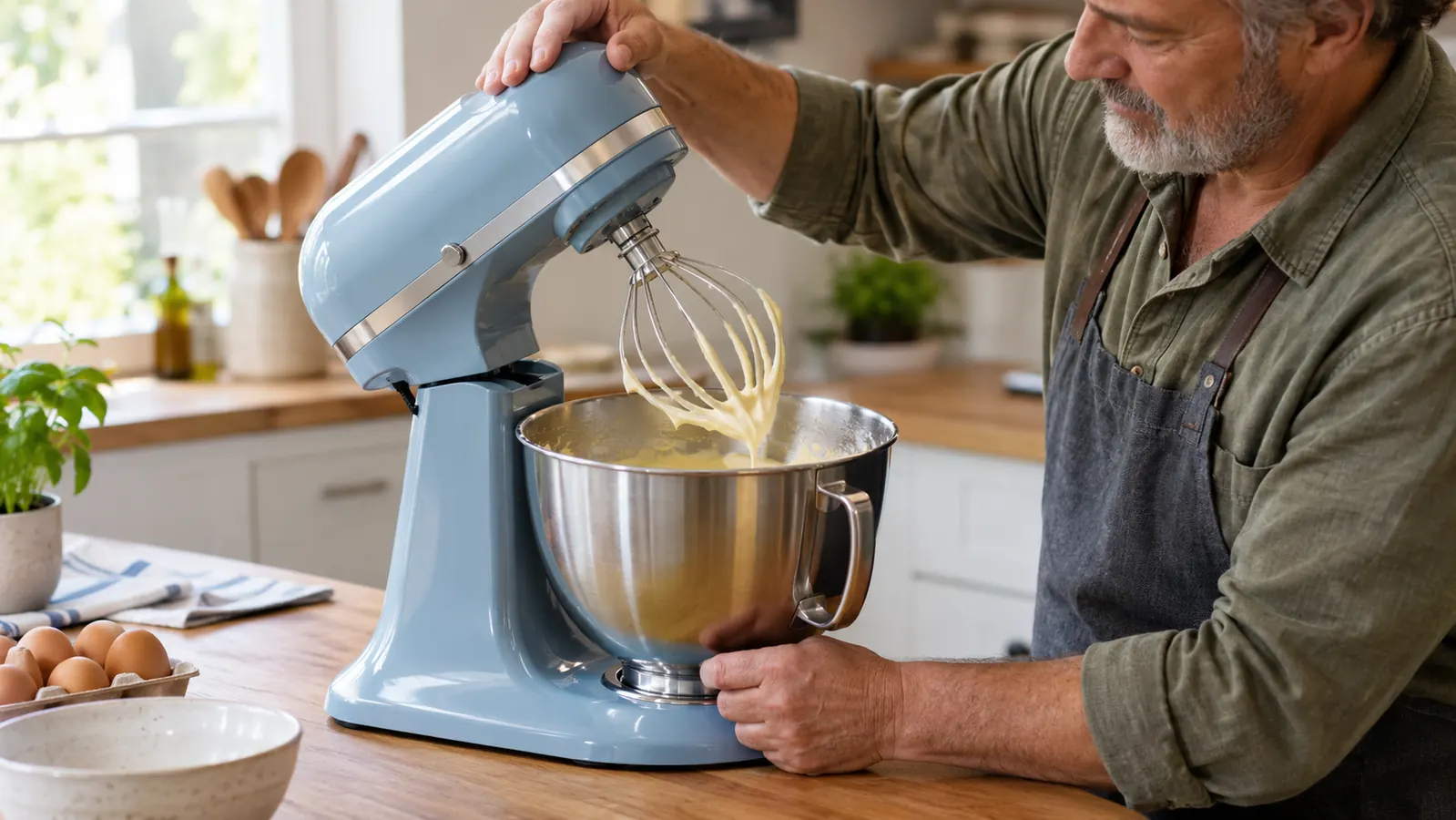
The second thing nobody tells you is that the tilt head is the whole personality of this mixer. You lift the head to change the beater, to scrape down the bowl, to check the batter. That motion, a small mechanical click, becomes the rhythm of every recipe. It is also the thing that makes the Classic different from the bowl-lift models. If you are the kind of baker who needs to peek at the dough every thirty seconds, the tilt head is your friend. If you make double batches of thick bread dough every single day, you might outgrow it.
The third thing, and this is the one that almost nobody mentions: the bowl is big, and it is not fun to wash. It is 4.5 quarts, stainless steel, and it is the included component you will handle the most. It is removable, which the special features list makes sound like a convenience, and it is. But a 4.5-quart stainless steel bowl is still a large metal bowl that you have to lift, carry to the sink, and dry. You will do this at least twice a week. It is not a dealbreaker. It is just a fact.
The fourth thing is the noise. I am not going to pretend the KitchenAid Classic is quiet, because it is not. It makes a low, steady whir that becomes part of the kitchen soundtrack. It is not loud enough to wake the teenagers, but it is loud enough that I know exactly when the mixer is on, even from the other room. I mention this because so many reviews talk about power and attachments and never mention that a stand mixer is a machine that makes machine sounds.
The 10 Speeds, Honestly
The KitchenAid Classic has 10 speeds, and that number is both more and less impressive than it sounds. More, because the range from the slow stir to speed 10 is genuinely wide. Less, because you will mostly live between speeds 2 and 6. I use the stir speed for folding in chocolate chips and for starting any batter slowly so flour does not fly across the kitchen. I use speed 2 for creaming butter and sugar, speed 4 for most cake batters, and speed 6 for cookie dough that needs a little more work. Speed 8 is where I whip cream for a birthday cake, and it gets there fast.
The speed control is on the side, and it is one of the details I have come to appreciate. It is a physical control, not a digital display, so I can adjust it with a flour-covered hand without reading a screen. It clicks into place at each speed, and after two years it still clicks. There is something reassuring about a machine that tells you, by feel, exactly what it is doing.
One honest note: the wattage is 275, and it shows on the thickest doughs. When I make a full batch of dense whole-wheat bread dough, the mixer rocks a little and I find myself holding the top of the head with one hand. It has never stalled, and it has never overheated, but it is not a commercial machine. It is a home mixer that knows its limits, and the limits are reasonable for a home kitchen.
The tilt head is the whole personality of this mixer: you lift it to change the beater, scrape the bowl, check the dough. That small mechanical click becomes the rhythm of every recipe.
What It Does Well
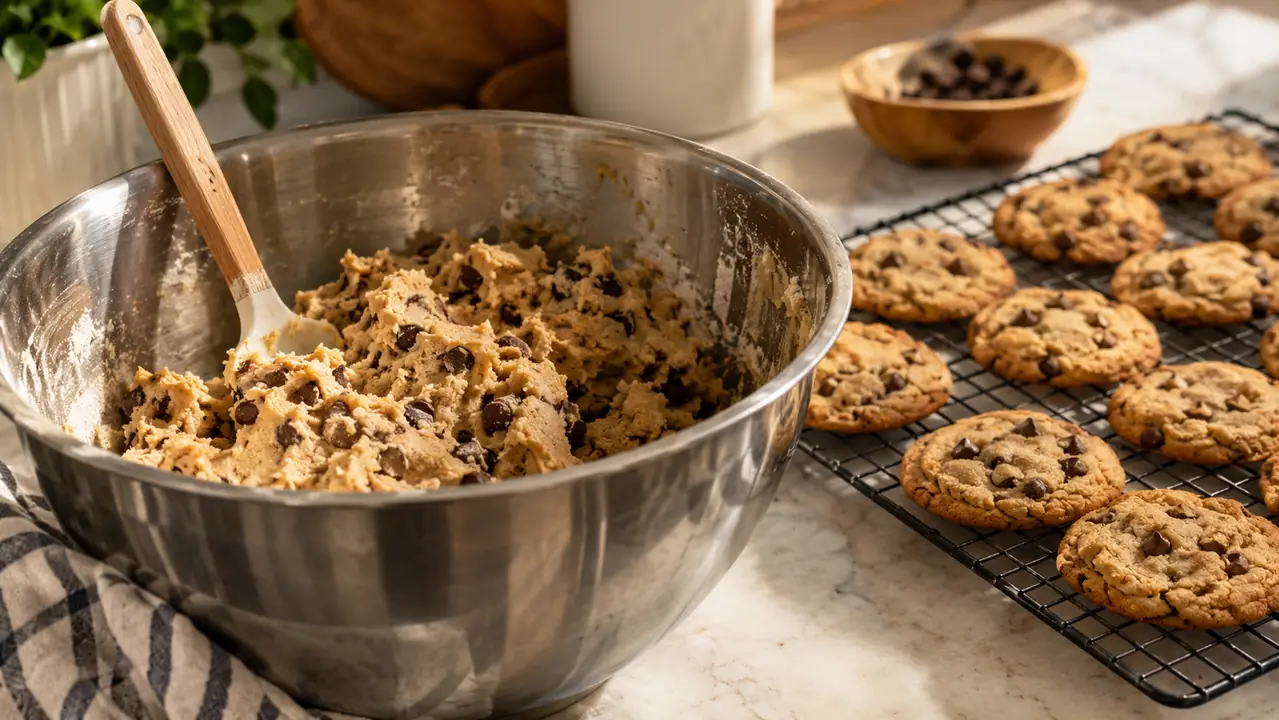
Cookie dough is where the KitchenAid Classic earns its keep. The flat beater, which is coated so it does not scratch the bowl, handles a double batch of chocolate chip cookies without complaint. I have made 8 dozen cookies in a single batch using the flat beater and the 4.5-quart bowl, and that is the batch size that makes a school bake sale feel manageable. It is also the batch size that makes me grateful I do not own a hand mixer anymore.
The 6-wire whip is the attachment I underestimated. I bought the mixer for cookies and bread, and then discovered that whipped cream, egg whites and the kind of frosting that needs to be actually fluffy come together in a fraction of the time they used to take. The wire whip is the included component I reach for on birthday weekends. It is also the one that makes me feel, briefly, like a person who knows what she is doing.
And the dough hook, coated like the flat beater, does real work. I am not a bread purist, but I make a white sandwich loaf and a honey whole-wheat loaf on rotation, and the dough hook kneads them both. It is not the same as kneading by hand, and I do not pretend it is. It is better. It is also the attachment that taught me the mixer's personality: you let it work, you do not fight it.
The metal construction deserves a mention too. This is not a plastic mixer with a metal bowl. The body is built to last, and after two years it still looks and feels like the day I unboxed it. There are 59 touchpoints around the mixer bowl, which sounds like a marketing detail until you notice how well the bowl sits and how easily the beaters clear the sides. The whole thing is heavier than it looks, and that weight is exactly what keeps it steady while the dough hook works.
Where It Falls Short
The honest part of an honest review is admitting what is not great. The first thing is the bowl size. Four and a half quarts sounds generous, and it is, but it is also the reason I have to divide some recipes. A full batch of bread dough that uses six cups of flour fills the bowl to a point where I am scraping the sides more than I would like. It is not a defect. It is the size of the machine, and the size is what makes it fit on my counter.
The second thing is the weight. This machine weighs 22 pounds, and that is a feature and a complaint at the same time. It is heavy enough to stay put when I am kneading dough, which is what I want. It is also heavy enough that I do not move it. It lives on my counter, and if your kitchen does not have a permanent spot for a 22-pound mixer, you will think twice before hauling it out of a cabinet. I have a permanent spot. It is the first thing I see when I walk into my kitchen, and I like that.
The third thing is the bowl itself. It is removable, which is good, but it is also deep and wide, and the last bit of batter always hides at the bottom where the beater does not quite reach. I scrape with a rubber spatula, then scrape again. It is a small annoyance, and it is the price of a bowl that can hold 8 dozen cookies. If you are the kind of baker who hates wasting a single smear of batter, keep your spatula close.
The fourth thing is the warranty. It comes with a 1-year limited warranty, which is shorter than I would like for a machine in this price range. I have not needed it, and I know people who have had their Classic for decades, but I would feel better about a longer warranty on a 22-pound investment. That is a small thing, and I almost did not include it. But an honest review should include the small things.
What I Liked
- Tilt head makes scraping and bowl changes genuinely easy
- 10 speeds cover everything from folding to whipping cream
- Coated flat beater and dough hook clean up without scratching
- Sturdy metal construction holds up to twice-a-week use
Where It Falls Short
- 275 watts means thick doughs need a gentle hand
- One 4.5-quart bowl, so you wash between steps
- 22 pounds is too heavy to move around casually
- 1-year limited warranty feels short for this kind of investment
Cleaning and Care
Cleaning is the part of baking that nobody photographs, so let me be specific. The bowl, the flat beater, the dough hook and the 6-wire whip all go in the sink, not the dishwasher, because I do not want to risk the coating on the beaters or the finish on the bowl. I wash them by hand after every use, which takes about five minutes. The mixer body itself just gets a wipe. The tilt head makes this easier, because I can lift it and wipe underneath, where flour always finds a way to settle.
I will also tell you the one cleaning mistake I made, so you do not have to. I once let a buttercream sit in the bowl overnight because I was tired and the birthday cake was done. The next morning, it took real scrubbing to get the bowl clean. The stainless steel survived, and the mixer was fine, but I learned that this is a machine that rewards you for cleaning as you go. That is not a flaw in the mixer. That is a flaw in my scheduling.
What's in the Box
The KitchenAid Classic comes with everything you need to start baking, and nothing you do not need. In the box you get the 4.5-quart stainless steel bowl, the coated flat beater, the coated dough hook and the 6-wire whip. That is four pieces, and together they cover cookies, cakes, frosting, whipped cream and bread. There is no second bowl, no pouring shield, no storage case. You are not paying for a drawer full of attachments you will never use.
The dimensions are 14.1 inches deep, 8.7 inches wide and 13.9 inches high, and it weighs 22 pounds. I measured the counter space before I bought it, and I am glad I did. It fits, but it fills its spot. It is not a machine you tuck away between uses, at least not in my kitchen. It is a machine you give a home, and in return it makes the baking you actually do easier.
Who This Is For
The KitchenAid Classic is for the home baker who bakes real batches: a double batch of cookies, a birthday cake with actual frosting, banana bread for the office, a loaf of bread on the weekend. It is for the person who wants one sturdy machine that does not need a manual to operate, that fits on a normal counter, and that will still be working when the kids move out. It is for the person who, like me, would rather spend money once on something built to last than three times on things that wobble.
Who Should Skip It
If you bake once a month and a hand mixer already does the job, skip it. You will not get your money's worth, and the 22 pounds will sit in a cabinet. If you bake large quantities of heavy bread dough every week, consider a bowl-lift model instead. If you need a second bowl so you can whip cream while the cake batter waits, know that the Classic comes with one bowl and you will be washing it between steps. None of those are reasons to avoid this mixer. They are reasons to be honest about what you need.
I will also say this: if you are buying this mixer for someone who does not actually bake, it will become a very heavy, very attractive paperweight. The KitchenAid Classic is a tool, not a decoration. It earns its place by being used. If the person on the receiving end of this mixer is not someone who will use it, consider a gift card instead and let them choose.
Two years in, I would buy it again
The KitchenAid Classic is not the fanciest mixer, and it is not trying to be. It is the mixer that gets the job done, twice a week, every week. See today's price on Amazon and give it a real home on your counter.
Amazon Check Today's Price on Amazon →